

Until four years ago, I had lived in Parker County, Texas for a number of years. As
someone who loves history, I searched out facts about the area’s past. One of
the stories that fascinated me was the story of three children captured in the
county’s last Indian raid in 1872.
 |
| Comanche Warriors |
Sam Savage and his family farmed on Sanchez Creek. His aunt
and uncle farmed across the creek. A
group of raiding Comanche rode through and Sam’s father and oldest brother were
killed in the field where they were working. Mrs. Savage got the girls inside.
One girl who was fifteen was shot with an arrow as she scooped up her sister.
They barely reached the house in time to bar the door.
I might have feared the house would have been set on fire, but the Comanche were after horses—and
small children. Battles with the Army had decimated their numbers of young men as well as their horses. Comanche needed young people to continue their way of life.
Sam was six and his brother John was eight when the two boys
were captured. The Comanche then crossed the creek and killed the boys’ aunt
and uncle and captured four-year-old Mary, their cousin. Their captors did not kidnap other children on this raid.
 |
| Parker County and Palo Pinto Mountains |
When they camped for the night, the children were given raw
liver and forced to eat. They gagged and vomited but were shown no patience.
During the night, John escaped and started home. He was recaptured and the
soles of his feet slit so he would be unable to walk or run and no longer be
able to sneak out of camp.
The three children lived with the Comanche in Oklahoma
Territory for eighteen months. A trader spotted three white children in the
camp. He traded everything he had with him, including his saddle and
saddlebags, to rescue the three youngsters. The trader took them to Fort Worth
in an attempt to identify the kids and reunite them with their families. (I wish I knew the name of the trader, but I've been unable to find out more about him.)
 |
| Comanche Family by George Catlin |
By this time, Mary spoke only Comanche and could not even
communicate in English. Sam and John were able to give their names. Eventually, they
were reunited with Mrs. Savage and what was left of their family.
I don’t remember (if I ever knew) what happened to Mary or John,
but Sam remained in the area. He married a Pawnee woman and lived near Mineral
Wells for the rest of his life. When the foliage is down in winter, the site of
Sam’s cabin is barely visible from Highway 180 between Weatherford and Mineral Wells—if you know where to look. There’s also
a historical marker in Mineral Wells about these children.
I found this story fascinating and hope you will also.


Caroline Clemmons is an Amazon bestselling and award winning author. Her latest release is SNARE HIS HEART for Debra Holland's Montana Sky Series at Kindle World. In the story, Addie Ryan is the mail-order bride for Forrest Clanahan. He was badly burned trying in vain to rescue his wife from the fire in which she died. He's vowed never to love again but he needs a wife to help with his three children. Addie is determined to snare his heart for lasting happiness.
Caroline and her husband and their menagerie of rescued pets live in cowboy country of
North Central Texas. Find her complete list of releases at her Amazon AuthorPage. Subscribe to her newsletter to learn about new releases and contests. New subscribers receive a FREE copy of HAPPY IS THE BRIDE, a wedding disaster book with a very happy ending.


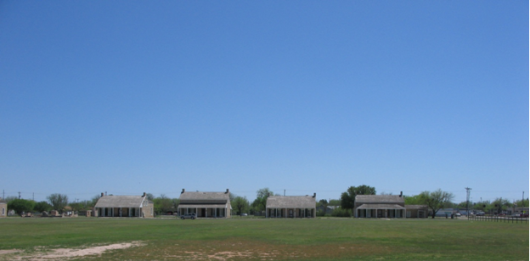 The fort was vital to settlement because five major trails crossed the area. An active post for twenty-two years, Fort Concho protected settlers, stagecoaches, wagon trains and the United States mail, and kept trade routes open. The Army launched campaigns against the Comanche and Kiowa from Fort Concho, as well as actions against the Comancheros who traded illegally with the Indians. Pecan wood was first tried as a building material for the fort, but it proved too hard to work with. Next, the soldiers tried adobe bricks but they didn’t know how to properly make adobe. Consequently, when heavy rain came, it dissolved the bricks. Finally, it was decided to build the fort out of native limestone, and the Army hired German stonemasons from Fredericksburg, in the Texas Hill Country to the south. Construction went on throughout the fort’s active period and was never completed. Today Fort Concho is a National Historic Landmark owned and operated since 1935 by the city of San Angelo. Over time several buildings have crumbled into ruins, but the remaining buildings are repaired and preserved by the city, assisted by the Fort Concho Foundation. While attending a conference in San Angelo several years ago, my husband and I visited Fort Concho and snapped a number of photos. Below are the best of the bunch. Unfortunately, I neglected to add captions after hubby loaded the pics to our old computer, and now I can’t recall what all the buildings are. I’ve labeled the ones I know. For more historical information and photos from the fort’s active period, visit


