Wednesday, October 12, 2022

FOOD PRESERVATION IN THE OLD WEST

 By Caroline Clemmons

When I wrote GENTRY AND THE MAIL ORDER BRIDE, I had the heroine, Heidi Roth, purchase a basket of food from a restaurant to take with her on the stagecoach. The basket included bottles of water and apple cider as well as sandwiches. Someone asked me if there were really bottles of drinks in 1875. The answer is yes!

Stephen Martinelli started a soda water business in a lean-to by his brother Louis’ barn near Watsonville, California in 1862. They produced apple cider beginning in 1868. They’ve won numerous prizes for their products. (In my opinion, Martinelli’s is the best apple juice ever.)

You’ve probably read that there was canned food for soldiers in the Civil War. When we lived in a rural area, I canned what seemed like a gazillion jars of vegetables and jellies and jam and fruit. I loved having home-canned food through the year. Taking a jar or two out of the pantry to serve when the weather was cold was a great feeling. However, I learned that if there is a day when you have too much to do and absolutely can’t spare the time—you think—to process food that day, that’s the day it’s at its peak and must be canned or frozen. 

The absolute champion of home food canning, and someone I hold in awe, is author Peggy L. Henderson. She canned enough for the year. I’ve never canned meat, but she canned chickens she had raised and had to kill, pluck, yada yada. The woman is amazing!


Drying Meat


We’ve probably all read about American Indians drying food over a fire. When I write about ranchers of the Old West, I include a smokehouse. When visiting one of Hero’s distant relatives at the site of a home of the mid 1800’s, we saw a beautiful example of a smoke house. In fact, that was the only structure remaining of the original farm buildings. I would love to have brought it home piece by piece to reassemble it. The wood was hand hewn and beautifully fitted together.

Since then, I’ve seen other smokehouses from that era, which, by the way, if my favorite for writing and reading. Smoking is the process of exposing meats, fish, and cheese to wood smoke, which has been shown to have antimicrobial effects on food, meaning it removes the microbes that cause bacteria to grow. This process was probably discovered by early cavemen burning fires in their caves without chimneys, causing the cave to fill with smoke and thus exposing food to smoke and unknowingly preserving it. Must have been hard on the lungs! Over time, they began pre-treating the food with salt before smoking, making the smoking even more effective. Today, smoking is mainly used to flavor food rather than preserve it. Picture the smoker grill on the patio.

Smokehouse


There was also the salt-dried method. The reason why salt is such an effective preservative is that it draws moisture out of food. Dry foods are less likely to spoil as moisture is a key requirement for organisms that spoil food. Salt has been used as a preservative since ancient times and was, in fact, so valuable in part due to its preservative powers that it became one of the first ever commodities traded and even wars have been fought over salt. Before the days of refrigeration and the modern heat treatments that are used to prolong the shelf life of foods, salt was one of the main methods used to preserve food. Without it people were subject to having to consume food quickly before it would spoil. With salt, civilizations were able to store food and build up reserves that would last in times of scarcity.

Even into the late 20th century, my uncle salt-cured his pork. The ham was so salty I probably couldn’t eat it now. As a child, I thought it was delicious fried and served with mashed potatoes and red-eye gravy. Yikes, it’s a wonder people survived that diet, but they worked hard. 
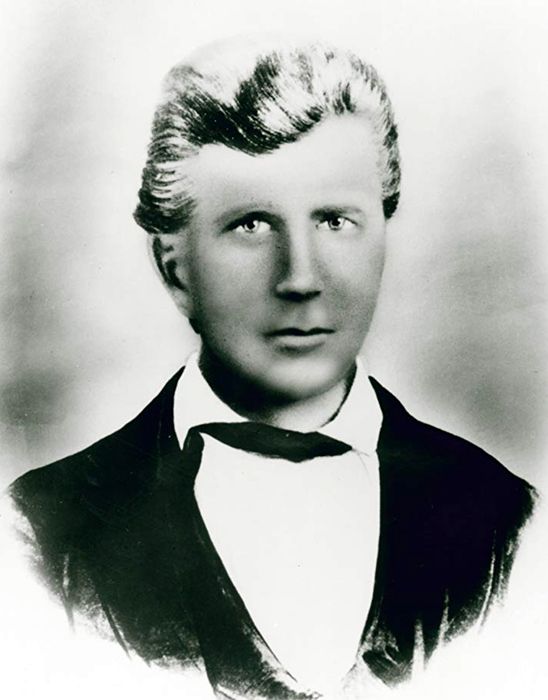
Oliver Loving
It was in salt that Charles Goodnight packed Oliver Loving’s body in New Mexico to be bring him back to his family for burial in Weatherford, Texas.

Fermenting

Sauerkraut fermenting
My grandmother used a large 
crock with a lid. 

Supposedly, fermentation was discovered by accident and dates back to 10,000 B.C. It's a unique way of preserving food because it increases the nutritional properties of foods. Fermentation is achieved when natural chemical reactions happen within food, causing it to spoil, but creating a new, edible food that will spoil more slowly than the original ingredients. Cheese, the use of yeast in making bread, and making sauerkraut from cabbage are all examples of fermentation. Sauerkraut was popular for covered wagon travelers.

This is just a brief list of the methods for food preservation in the Old West.

If you’re looking for a book to read, try my two books of the Texas Hill Country Mail Order Brides.


GENTRY AND THE MAIL ORDER BRIDE, book 1, https://www.amazon.com/Gentry-Texas-Country-Order-Brides-ebook/dp/B0B6YN6QHK

JESSE AND THE MAIL ORDER BRIDE, book 2, https://www.amazon.com/dp/B0BD64JC1D

QUINN AND THE MAIL ORDER BRIDE, book 3, will be released in late November.


Sources:

https://en.wikipedia.org/wiki/Food_preservation

https://nchfp.uga.edu/publications/nchfp/factsheets/food_pres_hist.html

https://www.martinellis.com/about/history/

https://preserveandpickle.com/salt-preserve-food/   

Saturday, October 8, 2022

400 square miles, 1,200 patients, 1 doctor by Cora Leland

Women Who Built The West by Cora Leland 


Dr. Susan La Flesche Picotte

Dr. La Flesche, daughter of Omaha Chief Iron Eye, is well-known.  Her father's unforgettable words were powerful.  He spoke carefully, as always, but especially when he returned to his people after the 1830 mandatory meeting of American Indian chiefs in Washington DC: "There's a flood coming soon and it's my advice that you prepare yourself immediately."

While he and Susan's mother, One Woman, taught their children carefully about their Native traditions and responsibilities, he included them in his advice.  They made sure their children were educated in tribal matters but also were highly educated.  For Susan, this meant attending the Hampton Institute -- more or less a boarding school, though for all nationalities and ethnic groups. She then went on to Pennsylvania Womens Medical College.  

Even the most powerful families in America sent their daughters for higher education, especially medical degrees, with care, for the backlash was fierce.  However Susan graduated a year early at the top of her class, declining a life of money to return to the Omaha tribe.  She was a full-time doctor, unlike her predecessors in that job.  She traveled the 400+ square miles to the 1,200 patients, night and day in all weather.Eventually she saved enough money to build and operate the first truly tribe owned medical hospital and took no government money for it.

Other important women included authors like E.M. Bower.  She was acclaimed for her realistic portrayal of the cowboy West, for she'd lived among them all her life.  Her books included The Eagle's Wing. For readers outside the West, what was every day to her was exotic.  Simply a logging camp or a horse-breaking, let alone a branding or dipping, was unbelievable.


Author BM Bower

Like many of us, the women writers of Western fiction or those who published  letters in say, the Atlantic Monthly like Elinor Pruitt Stewart, these authors didn't realize how earth-shattering their words were.  When they helped women realize that other places recognized womens' talents and allowed them civil rights, they began to think better of themselves and make changes for themselves.  Some even began to write.

I thank you for your attention and hope to return today.  Best wishes to you all from the busy frosty edge of the Great Plains.

Cora Leland Author


Thursday, October 6, 2022

Is there a Doctor in the house?


Howdy from Samantha !! 

When I started writing my novels, I never thought I'd end up writing as so many different people. In my newest book, Rachel’s Ransom, I had to write as a cowboy, soldier, nurse, sheriff and doctor. In just ONE book!

I learn something new with every book. 


With western novels there is all kinds of research, especially if you have your characters doing more than just sitting around looking at each other. When I’m writing, I come up with all kinds of questions. Nothing can be simple. One of my characters is always getting beaten up or shot and in need of a doctor. After all, writing about a doctor in the 1800's, what trouble could that bring about?


Picture from Pixaby


In Rachel's Ransom, of course, I needed a doctor. And, when you're writing the book, you have to know all of those fancy medical terms. When Max, from Rachel's Ransom, ends up getting hurt and is at Doc's office, then came the fun of figuring out how to make him better. 

I won't tell you what happened as I don't want to ruin the enjoyment of reading the book. My initial thought was that he needed some antibiotics. I rubbed my chin and wondered … did they have antibiotics in 1870?  Much to my dismay, they didn't, so that sent me on a wild goose chase. I had to find something that could help Max get well faster. 


Amazon Link for Rachels Ransom


Being a good western buff, the first thing that came to mind was, ‘ask the Indians.’ After all, that's what Jane Seymour, who played "Medicine Woman" in the 1990's television show, would have done. If you don't remember the show, you must not have ever seen Sully. My cousin wanted me to remind you that he was the star of the show for us ladies. :) 


My character, Rachel, was from South Carolina. So, I started looking for an Indian tribe from that area, and sure enough, I found one. Rachel was a nurse during the Civil War, and the Catawba Indians played a small role in the war. I figured they would be a good fit. If you want to read more about the tribe, check them out here on Wikipedia and Here.


           Here is an image of a Catawba family in 1908 a little past my story.  The image coms from  Wikipedia 


On with the story. Rachel, using her knowledge that she learned from the Catawba tribe, began to look for two things that would help Max with the pain and fever. The first was called Willow. Willow can be used as an anti-inflammatory pain reliever for aches and pains. So, she had to go looking for a willow tree, and of course, she found several.

In 1763, there was a report detailing 5 years of experiments on the use of dried, powdered willow bark in lowering fevers. By 1828, Joseph Buchner, at Munich University in Germany, was extracting the active ingredient from willow creating a bitter tasting yellow crystal that he called salicin. I decided to go with a tea made out of the bark to help Max with his fever.  You can read a lot more about the uses of Willow in general at this site. Here.


The next item on the list was something for pain. I'm sure once the fever was gone, and the willow was helping to fight down the infection, that some of the pain would leave. But, we needed something to work a little faster so I found the echinacea flower. It's very pretty, as you can see below, and thankfully, one of the places it grows is Missouri.  Again, no spoilers here, but Max and Rachel do spend some time in a couple of towns in Missouri. 


Picture from Pixaby 


The cute little flower is very helpful in pain relief.  In the book, I had Rachel boil it down and turn it into drops. I read this on one of the many sites I visited when trying to figure out how to get Max some relief.  Several studies now show that, so long ago, they were right. Echinacea contains active substances that boost immune function, relieve pain, reduce inflammation, and have hormonal and antioxidant effects.  BUT please, I only write as a doctor in my novels. One should NOT be running through fields, picking wild flowers and making tea from them unless we speak to our own personal physician.
 
To wrap up, we had Max on the mend and on his way back to good health. Now if I could just figure out how to send him a bill! Sorry, I like to toss in some humor when possible. I do hope you'll check out my first western novel. It is a romance, of course, and it's in Kindle Unlimited.  I hope you enjoyed the post this week and that you'll continue to drop by to learn new tidbits from what we authors need for our next novel. 
 
I'll dig into my notes and see what's next for the blog and get started on that. I hope you'll come back, and that you enjoyed your visit today. Thanks so much. Remember, pick up a copy of Rachel's Ransom at Amazon. It's in paperback, eBook, and yes, in Kindle Unlimited. 
 
Thanks, Samantha 


Thanks 
Samantha 

Samantha Fury is the author of  the Street Justice Series.  
She's written many articles on book covers, for Indie Authors.
She operates several Indie Groups. Editing Services, Cover
Artist, Helpful Indie Facebook Groups. 


Friday, September 30, 2022

Siouan Language Roots-Chiwere by Zina Abbott


Last month, inspired by my research into the Omaha tribe of Native Americans, I discovered they were part of the Dhegihan division of the Western Siouan Language group. As this group migrated west and south from the Great Lakes region, they broke off and separated into what today is several different tribes. To find that post, please CLICK HERE. ­

What really sparked my interest was that I discovered their new homelands along the Mississippi and Missouri Rivers were leap-frogged with that of other Siouan-language people of the Chiwere-Winnebago language division, also from the same general region, that also migrated west and south. I wish to share about the Chiwere tribes in this post.

1635 Native American Tribal Map

Around the 16th century, successive groups of the Ho-Chunk and Siouan-speaking tribes of the Western Great Lakes and Upper Midwest split off and migrated west and south. These became distinct tribes, the Otoe, the Missouria, and the Ioway. All these tribes were part of the Chiwere-Winnegago language division of the greater Siouan family, with the Otoe, Missouria, and Ioway specifically Chiwere.

Indian Tribes of Iowa

The Iowa, also known as Ioway, and the Bah-Kho-Je or Báxoje, which in English means gray snow. The Iowa, along with the Missouria and Otoe tribes were once part of the Ho-Chunk people. Members of these tribes are all Chiwere language-speaking peoples. They left their ancestral homelands in Southern Wisconsin for Eastern Iowa, a state that bears their name.

White Cloud head chief of the Iowa-painted by George Catlin

In 1837, the Iowa were moved from Iowa to reservations in Brown County, Kansas, and Richardson County, Nebraska. The Iowa moved to Indian Territory in the late 19th century and settled south of Perkins, Oklahoma.


Indian Map Nebraska-red- Dhegihan; blue: Chiwere

The Otoe were once part of the Ho-Chunk and Siouan-speaking tribes of the Western Great Lakes and Upper Midwest. Around the 16th century, the Otoe, along with the Missouria and Ioway, split off as they migrated west and south and became distinct tribes. The Otoe settled in the lower Nemaha River Valley of what is today southeastern Nebraska, but ranged into Kansas, Iowa, and Missouria.  

Indian Tribes in Kansas- Dhegihan; blue: Chiwere

They lived in elm-bark lodges while they farmed, and used tipis while traveling, like many other Plains tribes. They often left their villages to hunt buffalo. Later, they adopted the horse culture and semi-nomadic lifestyle of the Great Plains and made the American bison central to their diet and culture

Oto Delegation to Washington D.C. 1881

In the early 19th century, many of their villages were destroyed due to warfare with other tribes. European-American encroachment brought disease, leading to their decline.

Missouria - Otoe - Ponca by Bodmer

Today, Otoe people belong to the federally recognized tribe, the Otoe-Missouria Tribe of Indians, which is headquartered in Red Rock, Oklahoma.

Indian Tribes of Missouri- Red: Dhegihan; Blue: Chiwere

The Missouria or Missouri, who, in their own langugage, call themselves Niúachi, also spelled Niutachi, historically lived along the Grand River at its confluence with the Missouri River, the mouth of the Missouri River at its confluence with the Mississippi River, and in present-day Saline County, Missouri. They stayed closely connected to the Otoe. The now live primarily in Oklahoma. The state of Missouri and the Missouri River are named for the tribe.

I will cover the Ho-Chunk and Winnebago in a separate post.


My two most recent publications, Bee Sting Cake by Brunhilde and Loving Lila are both Thanksgiving romances.


BeeSting Cake by Brunhilde has been published and is available. To find the book description and purchase options, please CLICK HERE.


Loving Lila is currently on pre-order and will be released October 10th. To find the book description and purchase options, please CLICK HERE.


Sources:

https://en.wikipedia.org/wiki/Siouan_languages

https://en.wikipedia.org/wiki/Chiwere_language

https://en.wikipedia.org/wiki/Iowa_people

https://en.wikipedia.org/wiki/Missouria

https://en.wikipedia.org/wiki/Otoe

Monday, September 26, 2022

Lost Maples State Natural Area by Bea Tifton


Many people make jokes about Texas only having two seasons, hot and cold. While Texas doesn’t have the leaf peeping industry of New England, some places do exist where beautiful fall colors can be seen.  One of the most popular places to visit in the autumn is the Lost Maples State Natural Area.

Lost Maples State Natural Area is located in Bandera and Real counties. The park covers about 2, 174 acres. In 1979, the area opened to the public after being obtained from private owners in 1973. In 2009, the state acquired 603 additional acres.  Prehistoric people used the area, and in the late 1600s the Spanish explored and settled there. The Apache, Lipan Apache, and Comanche Indians roamed the area and had clashes with settler into the mid 1800s.

The park is visited year round for hiking, camping, bird watching, fishing, hunting, and star gazing. Among the most sought after birds are the green kingfisher, the black-capped vireos, and the golden cheeked warblers. Fortunate visitors can also spy gray foxes, white-tailed deer, armadillos, raccoons, bobcats, squirrels, and javelinas.


Although the natural area is popular year round, it’s quite well known for the breath taking fall foliage. Beginning in the last two weeks of October and lasting through the first two weeks of November, leaf peepers can travel to see the Uvalde big tooth maples show off.  The website includes a “Fall Foliage Report” and encourages visitors to visit during the week since the park only admits 250 cars a day. For the leaf peeper set in Texas, Lost Maples State Natural Area is a wonderful place to visit. 


Sunday, September 25, 2022

THE TRAVELS OF A RECIPE by Marisa Masterson


Once there was a lutheran pastor's wife who brought the recipe with her. She moved to the small community in Michigan and brought her fantastic cookies to her congregation. 

Later, a young wife received that recipe. She began to make the cookies and give them away. In fact, people started to believe it had always been her recipe.

When the wife was old and had become a grandmother, a young woman and her family moved into the community. The old woman took them under her wing. She shared more than the cookies and the recipe. The young family became like her own relatives. 

Who knows where the recipe started from? Who invented it? That's not the important part. 

What matters is the love each woman showed as she made the cookies and passed on the recipe to others. It's the love that I pushed to share in my next book. 

The recipe I'm referring to is for molasses cookies, and that's how it made its way to me. The recipe means so much to me that I wrote a book about it.

Curious about the recipe. It's included in my book!


Thursday, September 22, 2022

Pikes Peak - What's in a Name


Post by Doris McCraw aka Angela Raines


Pikes Peak
Photo Property of the Author

Most have heard of Pikes Peak, but do you know the other names that this mountain has had? Read On.

1. Tava - this is the name that the Ute called the mountain. The word means "Sun Mountain"

2. Montana del Sol - this is the name the first Spanish explorers used for the mountain. Translated it is "Mountain of the Sun"

3. El Capitan - this is the name the Spanish explorers used later. The definition is "the Captain" or "the Leader". This may have come into use as the peak is the easternmost of the 14ers on the Front Range of Colorado.

4. Heey-otoyoo- this is the name the Arapahoes gave the mountain. Translated it means "the Long Mountain"

5. Grand Peak - this is one of the names Zebulon Pike called the mountain in his journals.

6. Highest Peak - this is another name that Zebulon Pike for the mountain in his journals.

7. James Peak - This was in honor of Edwin James the botanist with the Long Expedition who actually climbed to the top in 1820.

8. Pike's Highest Peak - a number of the early explorers, trappers and settlers called the mountain by this name.

9. Long Mountain - The use of this name may have been for Stephen Long, the leader of the expedition of which Edwin James was a member.

10. Pikes Peak - the name we all know the mountain by today. Named for Zebulon Pike, who tried, but never climbed the mountain that bears his name. 

The mountain has also had many elevations over the years.

14,109', 14, 147', 14, 500', 14, 110', and finally 14, 115' which is the official altitude today. (And no, it is not the tallest peak in Colorado. The tallest is Mt. Elbert, near Leadville, at 14,433')

For fun, here is a link to the cameras at the top of the mountain: Cameras at the top of Pikes Peak

For a full article on the Peak: History Colorado article


I've just published a book about the early women doctors who are buried in Evergreen Cemetery, in Colorado Springs, CO. the town that sits on the base of Pikes Peak.

Amazon or Books2Read


Until next time, Happy Reading. Doris McCraw