Showing posts with label Loving Lila. Show all posts

Sunday, October 30, 2022

Siouan Language Roots-Dakotan by Zina Abbott


I have written two blog posts about other branches of the Siouan Language groups, which you may read by clicking HERE, for Dhegihan and HERE, for Chiwere. Today, I will touch on the one that many of us initially recognize as coming from Siouan roots—the Dakotan.

If you are good with outlines, here is how the Western Siouan languages are related:

  -  Western Siouan languages can be divided into

     -  Missouri River languages: Crow, Hidatsa, and Mandan

     -  Mississippi River languages:

          -  Dakotan

          -  Chiwere-Winnebago

          -  Dhegihan languages

      - Ohio Valley Siouan branches.

Why so many? The branches of the Siouan language all come from a common group of people who originally lived in the northeastern woodlands of North America. As their population grew, and/or they were pushed out of their traditional hunting grounds by other groups of Native Americans, and bands within their tribes broke away, these people eventually migrated to the regions around the Mississippi and Missouri Rivers.

Within the Dakotan language group, here is how it is organized:


-  Western Siouan

     -  Mississippi Valley Siouan


          -  Dakotan

               -  Sioux    

                    -  Lakota (Teton, Teton Sioux)

                    -  Dakota

                         -  Eastern Dakota (Santee & Sisseton)

                         -  Western Dakota (Yankton & Yanktonai)- misclassified as Nakota

               -  Assiniboine


 That is a lot of “follow the yellow brick road” when it comes to seeing how the Sioux language and its dialects fit together. 

Sioux family

One should keep in mind, the Sioux language is the fifth largest language group spoken in North America. The only four language groups in North America that are larger are Navajo, Cree, the Inuit languages, and Ojibwa.
 

Assiniboine family

The Assiniboine language (also known as Assiniboin, Hohe, or Nakota, Nakoda, Nakon or Nakona, or Stoney) is a Nakotan (Western Dakotan?) Siouan language of the Northern Plains. The name Assiniboine comes from the term Asiniibwaan, from Ojibwe, meaning "Stone Siouans". The reason they were called this was that Assiniboine people used heated stone to boil their food. In Canada, Assiniboine people are known as Stoney Indians, while they called themselves Nakota or Nakoda, meaning "allies".


You can see by a glance at the above map how much territory the speakers of Sioux and Assiniboine languages of the Dakotan language family covers. (The areas circled in orange. Their members are found in parts of Canada, including southern Manitoba and southern Saskatchewan. They are also found in the states of North Dakota, South Dakota, southern Minnesota, Northern Nebraska, and northeastern Montana.

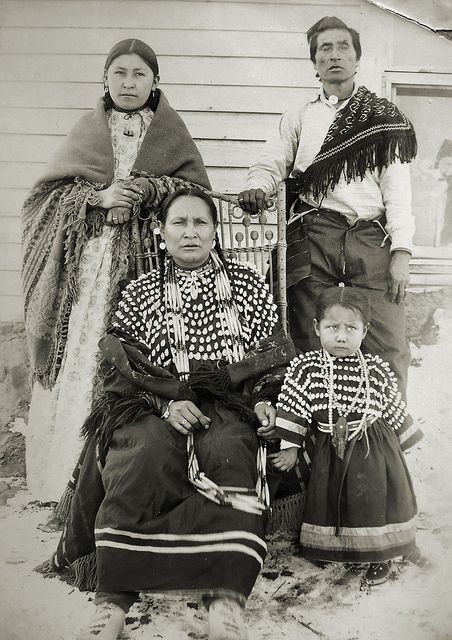
Lakota people
 

The Dakota and Lakota tribes were well-known tribes of the Great Plains. They were among those who fought long and hard against being forced onto reservations. They are often the tribes that appear in Western novels and romances.


What started my venture into the different branches of the Siouan language was my search for the origins of the Omaha Tribe, their language part of the Dhegihan language group, which was featured in my Thanksgiving romance, Bee Sting Cake by Brunhilde, which you can find by CLICKING HERE.


My other Thanksgiving romance, which takes place in Colorado, is Loving Lila. You will find the book description and link by CLICKING HERE.


I will not contribute to the blog again until after Thanksgiving, so I send my best wishes for a wonderful holiday.


Most of my information came from Wikipedia

Friday, September 30, 2022

Siouan Language Roots-Chiwere by Zina Abbott


Last month, inspired by my research into the Omaha tribe of Native Americans, I discovered they were part of the Dhegihan division of the Western Siouan Language group. As this group migrated west and south from the Great Lakes region, they broke off and separated into what today is several different tribes. To find that post, please CLICK HERE. ­

What really sparked my interest was that I discovered their new homelands along the Mississippi and Missouri Rivers were leap-frogged with that of other Siouan-language people of the Chiwere-Winnebago language division, also from the same general region, that also migrated west and south. I wish to share about the Chiwere tribes in this post.

1635 Native American Tribal Map

Around the 16th century, successive groups of the Ho-Chunk and Siouan-speaking tribes of the Western Great Lakes and Upper Midwest split off and migrated west and south. These became distinct tribes, the Otoe, the Missouria, and the Ioway. All these tribes were part of the Chiwere-Winnegago language division of the greater Siouan family, with the Otoe, Missouria, and Ioway specifically Chiwere.

Indian Tribes of Iowa

The Iowa, also known as Ioway, and the Bah-Kho-Je or Báxoje, which in English means gray snow. The Iowa, along with the Missouria and Otoe tribes were once part of the Ho-Chunk people. Members of these tribes are all Chiwere language-speaking peoples. They left their ancestral homelands in Southern Wisconsin for Eastern Iowa, a state that bears their name.

White Cloud head chief of the Iowa-painted by George Catlin

In 1837, the Iowa were moved from Iowa to reservations in Brown County, Kansas, and Richardson County, Nebraska. The Iowa moved to Indian Territory in the late 19th century and settled south of Perkins, Oklahoma.


Indian Map Nebraska-red- Dhegihan; blue: Chiwere

The Otoe were once part of the Ho-Chunk and Siouan-speaking tribes of the Western Great Lakes and Upper Midwest. Around the 16th century, the Otoe, along with the Missouria and Ioway, split off as they migrated west and south and became distinct tribes. The Otoe settled in the lower Nemaha River Valley of what is today southeastern Nebraska, but ranged into Kansas, Iowa, and Missouria.  

Indian Tribes in Kansas- Dhegihan; blue: Chiwere

They lived in elm-bark lodges while they farmed, and used tipis while traveling, like many other Plains tribes. They often left their villages to hunt buffalo. Later, they adopted the horse culture and semi-nomadic lifestyle of the Great Plains and made the American bison central to their diet and culture

Oto Delegation to Washington D.C. 1881

In the early 19th century, many of their villages were destroyed due to warfare with other tribes. European-American encroachment brought disease, leading to their decline.

Missouria - Otoe - Ponca by Bodmer

Today, Otoe people belong to the federally recognized tribe, the Otoe-Missouria Tribe of Indians, which is headquartered in Red Rock, Oklahoma.

Indian Tribes of Missouri- Red: Dhegihan; Blue: Chiwere

The Missouria or Missouri, who, in their own langugage, call themselves Niúachi, also spelled Niutachi, historically lived along the Grand River at its confluence with the Missouri River, the mouth of the Missouri River at its confluence with the Mississippi River, and in present-day Saline County, Missouri. They stayed closely connected to the Otoe. The now live primarily in Oklahoma. The state of Missouri and the Missouri River are named for the tribe.

I will cover the Ho-Chunk and Winnebago in a separate post.


My two most recent publications, Bee Sting Cake by Brunhilde and Loving Lila are both Thanksgiving romances.


BeeSting Cake by Brunhilde has been published and is available. To find the book description and purchase options, please CLICK HERE.


Loving Lila is currently on pre-order and will be released October 10th. To find the book description and purchase options, please CLICK HERE.


Sources:

https://en.wikipedia.org/wiki/Siouan_languages

https://en.wikipedia.org/wiki/Chiwere_language

https://en.wikipedia.org/wiki/Iowa_people

https://en.wikipedia.org/wiki/Missouria

https://en.wikipedia.org/wiki/Otoe