Saturday, January 22, 2022

What Were They Reading?

 Post by Doris McCraw

writing as Angela Raines

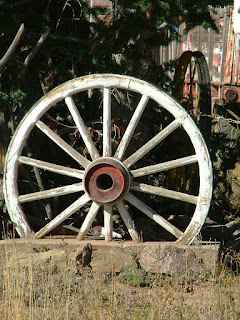
Photo Property of the Author

Have you ever wondered what they read in the 1800s?  There are times when I see a book mentioned and I wonder, was that book even written then? We know not everyone could read, but that doesn't preclude telling others about the story. Since I wondered, I thought, why not try to find out. Below is a list of books that you might not know were around in the 1800s when the west was opening up. Some of the books listed began as a serial in a magazine prior to book publication. 

 "The Corps of Discovery - The Lewis and Clark Expedition" Two volumes

"The Legend of Sleepy Hollow"  by Washington Irving

"Narrative of the Life of Fredrick Douglass" by Fredrick Douglass

"Candide" by Voltaire ( written in the 1700s )

"Robinson Crusoe" by Daniel Defoe (written in the 1700s )

"The House of Seven Gables " by Nathanial Hawthorne

"The Prairie Traveler" by Randolph B. Marcy - Captain U.S. Army

"Walden; or Life in the Woods" by Henry David Thoreau

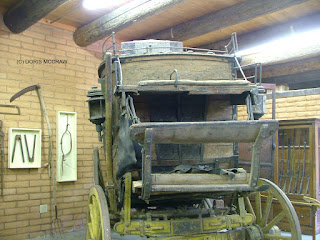
Photo Property of the Author

Additional books that they may or may not have read that were published in the 1800s

"On the Origin of the Species" by Charles Darwin

"Communist Manifesto" by Karl Marx

"The Life of Samuel Johnson" by James Boswell

"On Liberty" by John Stuart Mill

"Two Years Before the Mast" by Richard Henry Dana

Photo Property of the Author

I've not included poetry although it was popular. What do you think these travelers were reading or sharing stories about? How many who may have been snowbound perhaps learned to read from some of these works. 

The 1800s were a time of growth and change. Of the books we read now, how many were influenced by these early works? It does make one think.

Until next time, happy reading and writing! Doris


Sunday, January 16, 2022

Ring in the New Year - Past New Year's Traditions 1865-1920 by Jo-Ann Roberts


Happy New Year, Friends!

Since many of our holiday traditions in the United States came to our shores from immigrants looking for a better way of life for themselves and their families, New Year's was no exception. 

Following the Civil War, parties, dancing, and festive spirits were staples of New Year's celebrations, just like today. Yet, there were many other odd, quaint, and charming customs that, for the most part, are no longer practiced today. 

Matchmaking

Wealthy folks would hold "open houses", inviting all the local eligible bachelors into their homes to meet their unmarried daughters...similar to today's speed dating! The bachelors would spend about fifteen minutes chatting with the unmarried daughter, provide her with his calling card and move on to the next home. If interested, the daughter would call upon the bachelor for another visit to talk and to meet her family.


In New York City, young men would race around the city to visit (call on) as many young women as possible. By the 1890s, the custom had fallen out of fashion in in favor of more exclusive New Year's Eve parties.  

The calling card to the left is that of Mr. Augustus Rux (pictured on the card). Apparently, he was successful as he married Mary Beck in 1916. They had two children together.

New Clothes

While many people didn't have the means to purchase a new outfit to wear on New Year's Day, women and girls often tied ribbons in their hair. Pioneer men might sport a new kerchief to symbolize fresh beginnings, and leaving of all the past year's hardships.

The Threshold 

The threshold represented the crossing from one year to the next. At the stroke of midnight, the front door was flung open, and one greeted the new year with shouts of "Welcome!" The head of the household would take three bits of bread before throwing the loaf against the door while those gathered prayed "that cold, want or hunger might not enter" in the coming year. 

If the first visitor of the year to cross the threshold by stepping into the home (whether family or friend) had dark hair, it meant good fortune was ahead for the family. If the person had blonde hair, it meant troubles loomed.

Pigs and Clovers


Postcards were often sent to and from loved ones, a number of them containing pigs and clovers, as they were considered bearers of good fortune for the year ahead.

Cleaning the Hearth

Cleaning out the ashes from the hearth was completed on New Year's Eve as a sign of sweeping away all the past year's misfortunes and ushering in the new year with a clean slate.

Divination 

People would playfully predict one another's fortunes for the new year interpreting each other's tea leaves, and by engaging in opening the Bible to a random page. Known as "dipping", the player would, without looking, point to a particular passage. The selected excerpt was thought to predict the good or bad fortune of the person doing the dipping. 

Bell Ringing

Many towns and cities rang bells at midnight to chase away evil. This may have led to the present-day tradition of noisemakers and party horns. 

The tradition of ringing in the new year at Times Square in New York dates back to December 31, 1904.

In 1904, the New York Times newspaper moved their location to Longacre Square.  To mark the joint celebration of its move, a name change to Times Square, and the impending new year, thousands were invited to the festivities.

Shortly before midnight, dynamite exploded as a signal that fireworks were set to begin, and the giant numerals 1 - 9 - 0 - 5 were illuminated atop the New York Times building in the direction of theaters, hotels, and restaurants downtown. This annual celebration with fireworks continued for the next two years. 

In 1907, New York banned fireworks and a new way to ring in the new year was sought. It was decided a ball, constructed of wood and iron, and illuminated with 216 electric lamps would signal the new year. 


New Year's Eve, 1907. The streets were blocked off from traffic and the crowds kept back to ensure safety for all visitors, hence the scene seems bare.

The ball has changed locations through the years, its move to its current location at One Times Square in 2009. The dropping of the ball has been an annual tradition in Times Square since December 31, 1907, the only exceptions being 1942 and 1943 in observance of wartime blackouts.

Although many of these traditions are obsolete or have morphed into something different, opening one's home, along with special foods served and enjoyed on New Year's has lasted for generations. My wish for you is still the same as those who have gone before us...luck, good fortune, prosperity and health throughout the coming year.


Wednesday, January 12, 2022

A Few Western Terms by Bea Tifton

Not too far from me is one of the greatest places on earth. It’s a big used (and some new) bookstore just perfect for finding interesting books. It’s a great way to find specific books, but my favorite thing is just to wander. Upon one recent expedition, I found something perfect for a book/word nerd. The Dictionary of the American West by Will Blevins can provide you with many useful terms to fit in if you are magically teleported to the Old West or if you just want to learn and use a few more colorful phrases. Some of  the definitions in the book are for more modern cowboys, as well. 

Here’s a sampling to get you started: 


Back East: The reverse of out West. For some, it had the implication of being ‘back in civilization.’ For others, it meant “back where everything is messed up.’ 

Belly Gun: A short-barreled pistol stuck naked into the waistband of your pants instead of holstered

Cash in His Six-Shooter: What an outlaw was said to do when he used his pistol to withdraw money from a bank 


Hen Fruit: A logger’s name for eggs 


Last Roundup: Death

Leaky Mouth: Someone who is too talkative

Like Getting Money from Home: Easy and pleasant

Mail-Order Cowboy: A tenderfoot decked out too fancily in what he hopes is cowboy clothing

On the Dodge: On the run from the law

Pie Buggy: A wagon sent to town for supplies 


Rust the Boiler: To drink alkali water 

There’s a One-Eyed Man in the Game: someone is cheating at poker 


Whomper-jawed: a sideways, crooked, or roundabout way 


So put on your bat wings (chaps), saddle your horse,  and go out and use a few new expressions today. 


Saturday, January 8, 2022

I'm Thankful for Western Authors! by Cora Leland

 For the first few weeks of each year, I walk through life with a deep sense of gratitude. Today I'm thankful for all my wonderful colleagues who also write historical western novels.  It's a language that a good deal of the world doesn't speak.

Julia Ridgemont spoke of her latest work that takes place in Denver. My Native American books have unleashed fervor I didn't know existed in me -- especially during the sub-zero Nebraska winter. I'm convinced that overlooked details that paint stories are key for bringing the 19th century to life.  

I enjoyed Caroline Clemmons' article about the Comanche scalping of that poor fellow: & it was exactly what I've unearthed. Comanche stripped and scalped settlers at the very least; and their movements were swift. Comanches were in charge of the southern plains (like Texas). Unlike the other tribes, they weren't driven from the east of the country because of crowding. They simply saw better prospects on the plains. They treated other tribes with the swift brutality that settlers received in order to gain control of the southern plains. 

Cheri Kay Clifton wrote that sounds of nature and the wildlife can stir curiosity in readers.  My readers seem to enjoy these Native books. Hopefully the details of every day tribal life, ceremonies and dances are part of it. 

I'm not sure how I'll convey the prosperity this Comanche chief shows; others have said the same: Comanches always had money, always had plenty to eat and share, wore good clothes, spoke several languages. But he'll make an excellent antagonist -- guns and all.

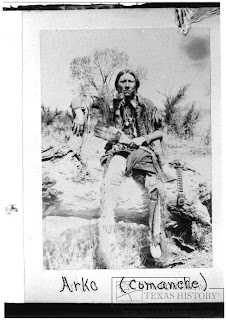
The man to the left is in Oklahoma. I've sat on rocks like that myself.  I was surprised at the layers of fringed and finely decorated garments he wore.  Like other plains tribes, Comanches often had several wives. (I wondered how many women  sewed the fine clothes and moccasins he wore and if their needles were animal teeth, as was reported. Certainly they'd tanned the hides.) 

However, Comanches weren't vindictive if their wives were stolen (tribal women were in demand,just like settler women), or if they ran off.  They seldom tried to recover their errant wives, though occasionally they'd ask the new husband for payment.   (Other plains tribes deformed the runaway wives, cutting off noses and ears.)

The site where I got this photo is Texas History. The photo belongs to the Rescue Texas History program. They offer a useful zoom and good downloads. 

For example, the gun belt, holster and gun to his left, resting on the rock can be seen without a zoom. More difficult to see is the arrow on his right thigh. Besides being aggressive raiders, Comanche thought about the long term effects of trade.  When they arrived on the plains, they'd immediately allied with the French fur trappers and traders, for metal objects like guns, ammunition, metal arrows and knives, but also for creating allies.  The French traders were eventually driven from America, but they'd married Natives. 

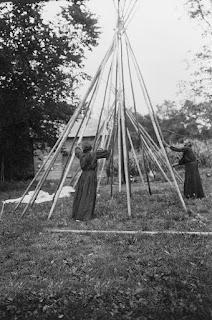
Native women putting up a tepee


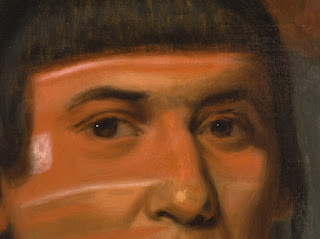
No-Tin, Chippewa chief

But for my romantic hero, I didn't want fierce looks or gun belts.  I found him on Useum.  This portrait was commissioned by the US govt. for promoting peace with the tribes.  The government asked a  hundred chiefs to Washington D.C. and asked portrait artists to capture their likenesses.

My romantic heroine? Her sister Vera, in book 1, married a Lakota man, Black Wolf.  This must be a trope:  Lucy, Vera's sister, is in love with Elk, Black Wolf's brother.  Here is one painting that inspires me to create Lucy and to write yet another demanding romance novel. 

Thank you all for your interest, and thanks to all my author colleagues for their inspiration and guidance.

Cora Leland
and coming soon...
Rescuing Baby and Bride
Bk. 2, Lakota Rescue Series


Tuesday, January 4, 2022

WILDLIFE IN THE AMERICAN WEST By Cheri Kay Clifton

As western authors, we know that settings are as important as our characters and plots. We want our readers to get a clear and vibrant sense of the western location in which our story takes place.

One way I use to engage my readers and enhance the believability of my fictional books is to be sure to include the sights and sounds of western wildlife common to the story’s location, be it in the prairies, great plains, mountains, or deserts.

For you reference, below is a compilation of commonly found wildlife in the Western United States.

 GREAT PLAINS & PRAIRIES:

American Bison
Pronghorn Antelope
Mule Deer
Black Tailed Jackrabbit
Whitetail Deer
Prairie Dog
Ferret
Coyote
Grey Wolf
Western Diamondback Rattlesnake
Badger
Golden Eagle
Prairie Falcon
Prairie Chicken
Western Meadowlark

MOUNTAINS ELEVATION 5000 & ABOVE

Elk (Wapiti – is a Native American word meaning “white rump)
Black Tailed Deer
Bighorn Sheep
Rocky Mountain Goat
Grizzly Bear
Black Bear
Mountain Lion
Bobcat
Wolf
Beaver
Porcupine
Tree Martin
Great Horned Owl
Peregrine Falcon
Moose
Mountain Chickadee
Downy Woodpecker
Mountain Jay
Western Bluebird

DESERTS:

Blacktail Deer
Pronghorn Antelope
Desert Bighorn
Antelope Jackrabbit
Coyote
Desert Woodrat
Mountain Lion
Jaguar
Desert Tortoise
Roadrunner
Trap Door Spider
Gila Monster
Harris Hawk
Common Raven
Quail
Desert Sidewinder Snake
Desert Iguana
Stink Bug

HAPPY NEW YEAR & THANKS FOR STOPPING BY!


My Author page: https://www.amazon.com/-/e/B002BLZOKC

Book 1, Trail To Destiny - A turbulent cross-country journey of heated passion, bitter vengeance and a haunted past lead Grey Wolf & Laura Westbrook on their Trail To Destiny.

Book 2, Destiny's Journey - Family deception kept Jennifer O’Malley from marrying her first love ten years ago, West Point officer, Glen Herrington.  Now a Civil War widow, she leaves war-torn Richmond, determined to find her destiny.  She makes the long journey west in search of Glen, only to discover he is a notorious outlaw with a price on his head.

Book 3, Yesteryear’s Destiny - When Angela Moore skydives out of a plane and into the western frontier of yesteryear, she not only meets the love of her life, Ben Herrington, but discovers a fateful revelation that exceeds the boundaries of time and will control her destiny.


Thursday, December 30, 2021

Chinese Walls by Zina Abbott


When I first moved from Los Angeles to the San Joaquin Valley in the 1970’s, on my first road trip to Sonora in the Mother Lode foothills to the east, I noticed, first, that there was a lot of rock that looked almost volcanic. I also noticed the fields of the rolling hills were covered with walls made of the black basalt rock. I was told these are called “Chinese Walls,” because they were built by Chinese workers in the nineteenth century.


One of the great contributions of Chinese Americans to development of California was their stone masonry skills. However, there were stone masons of other nationalities at work in the state at the time, so without conclusive documentation, one cannot be absolutely certain how many walls were built by the early Chinese.


This photograph, above, was taken about four years ago along Highway 108 to Sonora. There are very few Chinese Walls remaining along this route to the gold fields that dates back to the 1850's. Although they seemed to last from the early 1860’s to about the 1980’s, modern development coupled with a disregard for the history of the region has tended to take its toll.


These rock walls, which date back to the early 1860's, built with field stone or river rock, are also called "Chinese Walls" because they are believed to have been constructed by Chinese laborers. Several instances of reports of work crews by Chinese laborers might be found in the Mariposa Gazette, the county’s newspaper which dates back to the 1860’s. These stone walls meander through Mariposa County in lines that define the contours of the land. They can often be seen from more modern roads, such as the one in the photograph above. I took this picture and the one used for the post header a mile or so south of Highway 140 to the west of Mariposa.

The stone walls on the Quick Ranch is well documented as having been built by Chinese workers under a Chinese contractor, since the ranch has remained in the family of the founder for six generations. They serve as a prime example of Chinese stone masonry technique and can be used to help identify other Chinese stone walls throughout the state. Unfortunately, in my opinion, this historic photograph of this wall, which was about four feet in height, and used to contain and separate the ranch’s livestock, visually leaves a lot to be desired.

The Quick Ranch sits in the rolling foothills along the former Raymond-Mariposa Road. The original plank house that dates to the 1850s still stands. The ranch is now owned by Clyde E. Quick, the great-grandson of the founder, Morgan W. Quick.

In 1849, Morgan Quick, at the age of 21, sailed from New York to California, then traveled to Mariposa to mine gold. In 1859, Morgan bought a homestead 11 miles south of Mariposa for $250. The 160-acre property was located on Rancheria Creek, surrounded by a common brush fence. The highest hill on the ranch is 2,022 feet. Altogether, including various home steads, the ranch covered 4,000 acres. Remains of the homesteads are still on the ranch.

In 1862, Morgan Quick had a rock wall built. This not only kept the livestock in but cleaned the fields of rocks. Cattle, horses, hogs, turkeys, and chickens were raised over the years. The family grew their own barley and wheat, and harvested wild oat hay.

Chinese workers from Mormon Bar built the fence under the direction of a Chinese boss. Morgan also agreed to feed the workers and bought a herd of hogs at about a cent and a half a pound to provide pork. Most of the original wall is still standing. Although other parts of the ranch remain, one of Morgan Quick's greatest monuments is the rock wall.

From the 2008 Sierra Sun Times article, “Chinese Walls,” By Rochelle Frank:

Morgan Quick agreed to pay a Chinese contractor $1.75 for each rod (sixteen and a half linear feet) of stone wall. He also provided pork and rice for the workers. The contractor, who sat under an umbrella tracking construction progress with an abacus, paid his workers 25 cents per day IF they completed a rod and a half (twenty four feet and nine inches). The daily wage was lost if workers failed to meet the quota. 

The whole project, about four miles of stone wall, took almost a year to complete and cost the rancher $6,000.

The workers cleared fields of stones and used them to build four foot high barriers that marked property boundaries and formed cattle enclosures. No mortar was used to hold the wall together. Skillfully stacked, the uncut stones were carefully placed to slope inward on each side. Being about two feet wide at the bottom, they tapered up to one foot wide at the top. Some of the walls still serve their original purposes today, where an addition of stakes and barbed wire have been incorporated into the original stone foundations.

 ~o0o~

Although Mariposa County is not featured in my book in the Bachelors & Babies series or my two in the Cupids & Cowboys series, it is the county immediately to the south of Tuolumne County, of which Sonora is the county seat. However, the basalt rock Chinese Walls along what was originally the Old Sonora Road would have been seen by Cole, Madeline, and their parents as they traveled between Knights Ferry and Sonora. Below are the links for these books.


Kendrick http://mybook.to/Kendrick-BnB

Cole - http://mybook.to/Cole-CnC

Madeline - http://mybook.to/Madeline


Sources:

https://www.nps.gov/parkhistory/online_books/5views/5views3h65.htm

http://www.goldrushcam.com/2008/LG/sierra_sun_times%20linda%20gast%205.htm

Tuesday, December 28, 2021

Happy New Year!

Right now I am writing Grace's Gift, which takes place in Denver in 1875. Progress on this story has been slow because of the holiday season as well as having to research the area, but I believe I can finish in time to release it on January 11th. I've learned a lot while researching the beginnings of this great city. Did you know that Denver began as a mining town and, like Chicago and San Francisco, it suffered a great fire that destroyed nearly everything? Afterward, no one was allowed to build houses out of wood. Denver also suffered not one, but two, floods in its early years. Honestly, this place could have easily been swept off the map had not so many people poured into its fertile land from 1865 to 1890. And the mining had long since dried up during that time. What were they all coming for? Other opportunities like land purchases and retail, from what I've read. (And probably to get away from unwanted suitors or family members, though there aren't so many documented cases of this.) Quite a contrast from the crowded streets and cities back east.


I don't have much to share about this story yet, as I've struggled to write it, but look for it on January 11th, and I want to wish you a Happy New Year. I hope 2022 is everything that you want it to be!