Thursday, March 26, 2020

CREEDE, A COLORADO SILVER BOOMTOWN

By Caroline Clemmons


The California Gold Rush that followed the 1848 discovery was credited as the largest and most important event in the opening of the western frontier. The California Gold Rush set the stage for many smaller rushes and booms throughout the west.

In addition to gold rushes, there were a series of silver rushes. Creede was the last silver boom town in Colorado in the 19th century. The town leapt from a population of 600 in 1889 to more than 10,000 in December 1891. The Creede mines operated continuously from 1890 until 1985. They were served by the Denver & Rio Grande Railroad. Traveling by highway today, Creede is about 265 miles southwest of Denver and about 260 miles north of Albuquerque. Creede is located in southwest Colorado just north of the Rio Grande River and east of the San Juan Mountains. 

Nicholas Creede
A miner named Nicholas Creede was prospecting in what became North Creede in 1890. 

Supposedly, when he hit a rich strike he said. “Holy Moses, I’ve struck it rich.”

That makes me laugh, but he was right. The Holy Moses Mine became one of the most profitable in the region.

The small boom of 1890 increased when Nicholas Creede sold the Holy Moses mine for $70,000 to three investors who were connected with the D&RG Railroad. Creede was to receive a stipend of $100 a month to continue prospecting plus one-third of all future finds. He then located the rich Amethyst vein which included several lucrative mines. His income was estimated at $1,000 per day in 1892.
News of the big sale brought more people to Creede. At the same time, the Sherman Silver Purchase Act was passed by Congress in 1890, almost doubling the price of silver. You can understand why this brought increased numbers of prospectors to the Rocky Mountains where there were known silver strikes. 

Creede, Colorado, 1892
As more people heard of the strike, a camp bloomed in lower East Willow Canyon. Shacks, cabins and businesses began to be built. Some of those who came were families with women and children as a part of camp life from its beginning. The camp was first called Willow Camp, but in the fall of 1890 the miners voted to change the name to Creede. The narrow canyon was soon overflowing, so building was extended downstream and into Willow Canyon. This canyon was slightly larger, so cabins, houses and businesses were built there, too. However, the tale is that town space was at such a premium that buildings were even constructed on stilts in the river.

The year of 1892 was the biggest boom time in Creede’s history. By late spring, the boom brought miners, businessmen and ordinary folks. But it also brought in scoundrels – con men, gamblers, ladies of the night, gunslingers and others who wanted to mine the miners rather than the hills.

Bob Ford
Bob Ford, infamous killer of Jesse James, found his way there and he soon became the “camp boss” of all the shady businesses in town. A month later, Jefferson Randolf (Soapy) Smith arrived with his soap game. Smith challenged Ford to be the “camp boss” and Soapy won out. In June of 1892, Bob Ford was shot to death in his tent saloon by Ed O’Kelley.
Because of Bob Ford, Soapy Smith and all the saloons, gambling halls, gunfights and undesirable people and incidents, Creede got the reputation as one of the wildest boom towns in Colorado. Reportedly, at  one time there were over forty saloons in Creede.
The 1892 Colorado Business Directory stated the population of Creede as around 6,000 and close to 10,000 in the mining district. The Creede Candle newspaper reported that mine production was outstanding in 1892. The Amethyst Mine was listed as the highest producer of ore and the second highest was the Last Chance Mine.

Amethyst Band 1895
In the first half of 1893, Creede was still booming. The boom and the excitement came to a sudden end in August of 1893 when the U.S. Congress repealed the Silver Purchase Act. When the government quit buying silver, the price of silver crashed and silver mining in all the American West was halted. The boom was over. All mines closed in Creede. Many miners left town, which caused many businesses to close and owners to leave town.
Creede was one of the few lucky silver mining towns that never became a ghost town. Hundreds of little mining towns were abandoned in Colorado during the Crash. Within a few months the larger mines in the Creede District reopened but with much smaller crews and much lower wages. The town did not die, but it certainly changed, and it has never come even close to the boom time population.
As a mining town, Creede continued to experience boom and bust times. During the boom times more people would live there, buildings would be built, schools, churches and other groups would thrive. During bust times, many would leave town, businesses would close and social groups would have fewer numbers. Of course, the price of silver was the determining factor.
Creede Mine 1895
At the turn of the twentieth century, Creede experienced an economic upturn. In 1905 the Humphreys Mill and the Amethyst Mill were built. In 1930 the Emperius Mining Company was founded by B.T. Poxson and Herman Emperius. By 1945 they controlled most of the mines and purchased a mill just south of town.
In the 1960s the Commodore Mine was still being worked by the Emperius Mining Company. Homestake Mining Company came to Creede in that same decade and they opened the Bulldog Mine, initiating what was to become the last silver boom in Creede. In the 1970s the population was growing so fast that mobile homes had to be brought in and almost every nook and cranny in town had a trailer in it. In the 1980s the Commodore Mine ceased operation and in 1985 Homestakes’s Bulldog Mine halted its mining, closed its doors and sold many of its buildings.
This hardy town lived through many disasters. In the 1918 flu epidemic, the only place to put the ill was on the pool tables in the bars. In 1972, the train ceased to come to Creede, usually the death knell to any community. One of the worst disasters in the history of the town happened on June 5, 1892.
Around 6 o’clock in the morning a fire started in a saloon located at the north end. In two and a half hours most of the wooden district had burned down. It devastated the town, but had little effect on the mining. Although many of the business people left town, many stayed and started rebuilding the next day. This time, most of the businesses were built with brick which was made locally. The main block of the Creede business district today is reported to look very much like the rebuilt district looked after the fire.
Creede after the devastating 1892 fire
In the 1920s when automobiles became more affordable and popular, more tourists came to Creede. Many area ranches offered beds and food and later became dude ranches with cabins available. In town, accomodations were built for the tourists. 

Creede in 2005

While we're talking about Creede (segue here) my March 28 release is set in Creede,
POLKA WITH PAULINE, The Matchmaker's Ball Series, book 8. It's on preorder now at the Universal Amazon url http://mybook.to/Pauline and will be available in e-book and print and free in KU.
Pauline Brubaker arrives in Creede, Colorado from Denver to help care for her aunt while the aunt’s broken leg heals. Her aunt and uncle are special favorites of Pauline’s. They’ve recently retired to Creede due to her uncle’s heart problems. Pauline’s hesitant to give in to her attraction to Creighton because she will only be in Creede the few weeks her aunt needs her help. Her parents and her life are in Denver.


Creighton Reed makes amazing pieces of furniture. They sell as fast as he can create them. Creighton meets Pauline when her aunt and the sponsor of the Matchmaker Balls conspire to have them attend a dance together. He is immediately attracted to Pauline but she gives mixed signals. Later a man who claims to be her fiancĂ© warns Creighton away from her. Creighton tells the man he’ll believe Pauline’s engaged when she tells him.
Two fire bombs destroy Creighton’s workshop and his living quarters in the back, and he’s almost trapped inside. Fortunately, he has purchased a house in order to marry Pauline and had moved some of his things there before the fire. Who sent firebombs into his workshop?  The arsonist must be caught before Pauline, her aunt and uncle, and Creighton are safe.


Sources: 

Tuesday, March 24, 2020

Epidemics in the Old West

By Marisa Masterson

If you're like me, right now you are either self-isolated or you live in a state where you have been ordered to stay home. In fact, my daughter has to carry a letter from her employer just to travel to work. While I felt like the government's response to the pandemic is extreme, I changed my mind after reading about killing epidemics in the Old West.


Cholera victim depicted in a 19th century medical textbook. Ann Ronan Pictures/Print Collector/Getty Images

Cholera repeatedly reared its filthy head and claimed lives. There had been a Cholera epidemic in 1832 that killed thousands in both Europe and on the North American continent. About half the population of New York City left to stay in the country while cases of the disease continued to spread.

At the time, no one understood the disease and associated it with the poorer classes. Now we know that contaminated water sources cause it to start so it makes sense that the poor who relied on those sources would be the victims. Living in the tight quarters of tenement buildings, they easily spread the disease from one person to the next.

Immigrants at Ellis Island, NY.


In 1873, at least 18 states and territories, including Texas, experienced a new Cholera epidemic. Dr. J. B. Van Velson, a physician in the Dakota territory wrote that his first patients with the disease were Russians who came directly from the port in New York. Like many others of the time, the doctor believed Cholera was brought to the country by immigrants.


Cholera Epidemic 1873
In the end, the epidemic that ranged across the western part of the country was so severe that Congress became involved. It authorized an inquiry into the causes of the disease. While most Americans already understood that contaminated water caused Cholera, this inquiry helped educate people on the importance of washing and disinfecting.

The idea of germs was very new. But, by studying cases, doctors realized that people who cared for victims of the epidemic stayed healthy by washing their hands and avoiding contact with the fluids produced by suffering victims of Cholera.


Dr. Worth, in charge of the inquiry, summed up his findings with one sentence. "What vaccination is to small-pox, disinfection is to cholera." https://truewestmagazine.com/the-fastest-killer-in-the-old-west/ Amazing, he got to the heart of the matter and didn't even have a microscope.

Consider that and think about 2020. It's no wonder all of the hand sanitizer disappeared first from teh shelves!

So, we aren't the first Americans to face an epidemic or to panic. I am choosing to view this as extra time to read. I hope you are, too.


ON SALE TODAY! Only $.99 at Amazon.com!

Faced with an opportunity to prove he can be a successful businessman, Bode is desperate to buy into it the business using his inheritance. His trustee, however, won't release the necessary funds unless Bode marries that the man's choice of brides by proxy. Easy enough, Bode decides. After all, he can annul the marriage after the money is in his possession.


All thoughts of annulment disappear when he meets his less than shy or wilting Violet. But will Violet stay with him when she learns how Bode makes his living? 

Why do attempts on his life start when he makes it clear to the people around him that he plans to stay married?


Sunday, March 22, 2020

WOMEN DOCTORS & SUFFRAGE

Post by Doris McCraw
writing as Angela Raines

There is a lot in 2020 that reflects back in the history of this country and additionally, March is National Women's History Month. One hundred years ago, women across the country were given back the right to vote. Research from another source pointed out that when the country first started women were included in the voting process, but as time and development occurred, that inclusion was slowly eroded away.

This post will focus on Colorado and three of the women doctors who not only practiced medicine but also put time and effort into winning women the right to vote.

Alida Avery- Born 1833 in Sherburne, NewYork, began teaching school at sixteen. At the age of twenty-four, she began studying to become a physician. She was on the original staff at Vassar, where she taught physiology & hygiene along with being the resident physician. It was said in the nine years she was at the college she did not lose one student to illness. In 1874 at the age of forty, she moved to Denver where she set up a private practice. There is some indication she made around $10,000 a year. While in Denver, in addition to her medical duties, she also was active in working for women's suffrage. Newspaper articles of the time show her as president of the movement and in that capacity, she traveled. After retiring in 1887 at the age of fifty-four, she retired to California and increased her work on behalf of the movement.

Alida Avery.jpg
Dr. Alida Avery
photo from Wikipedia
Mary Helen Barker Bates - Born 1845 in Hannibal, New York, the daughter of Dr. Ezra Barker. She graduated from medical school in 1873 and spent time in Utah, where family history says she was a physician to Brigham Young's family. In 1878 she and her husband, attorney George Bates moved to Leadville, Colorado where she was probably the only woman doctor in the town at that time. In 1881 the couple moved to Denver, Colorado where Dr. Bates in 1885 joined the staff of the Women's and Children's Hospital in that town. Her husband died in 1886 and she did not remarry. Her career was a stellar one, and in 1893 she along with Dr. Mary Elizabeth Bates worked for the passage of the amendment to the Colorado constitution giving women the right to vote in that state.

Mary Barker Bates.jpg
Dr. Mary Helen Barker Bates
photo from Wikipedia
Dr. Caroline Spencer - Born in 1861 in Philadelphia, Pennsylvania, she taught history after graduation from the Philadelphia Normal School for girls in 1880. She received her medical degree in 1892 and returned to Colorado where she had visited in 1889 in the hopes of helping cure her bronchitis/asthma. She continued her practice of medicine while working for the national campaign for the passage of what became the 19th amendment. During her work on the national level, she was arrested on a least three different occasions. She was one of five women who stood silently during President Wilson's speech to congress in unfurling a banner from the balcony which read "Mr. President, what will you do for women's suffrage?".

Photograph of Caroline E. Spencer
Dr. Caroline Spencer
photo from Wikipedia
From the beginning of the suffrage movement in Colorado through the passage of the 19th amendment to the constitution of the United States, women doctors have been at the forefront of that fight. In this anniversary year let us not forget them. Two were unmarried, one was, yet they felt it important not only to heal the ill but also better the conditions of women and others.

The stories of these women and the focus of a lot of my non-fiction writing also inspire the women who inhabit my novels and short stories. My latest: "The Outlaw's Letter" and the story 'Duty' in the anthology "Hot Western Nights" from Prairie Rose Publications.

Purchase Here

Purchase Here
Doris Gardner-McCraw -
Author, Speaker, Historian-specializing in
Colorado and Women's History
Angela Raines - author: Where Love & History Meet
Angela Raines FaceBook: Click Here

Friday, March 20, 2020

REVIEW OF TRAIL OF THREAD

Caroline Clemmons here filling in for Lyn Horner. Lyn let me know her computer fell ill and is in the computer hospital. You can check out Lyn's great books at https://www.amazon.com/s?k=Lyn+Horner&ref=nb_sb_noss She writes western historical and paranormal romantic suspense.

Leave a comment to be entered in a drawing for an e-copy of DARLIN' IRISH, by Lyn Horner.

I'm reposting an article I wrote long ago, so perhaps if you read it then you've forgotten it.

Notice woman and children inside the wagon,
skeleton of cow or buffalo in lower left,
some men walk, some ride horses


TRAIL OF THREAD by Linda Hubalek
Review by Caroline Clemmons

I love history, both reading and writing tales of long ago. I especially like the westward expansion stories of brave and sometimes foolhardy pioneers who left homes in search of a better future or adventure. Some of the books I’ve read are full of anachronisms or incorrect information. That’s why I am such a fan of Linda Hubalek’s TRAIL OF THREAD. Linda used family information as a basis for her novel.

I have great sympathy for the wives of the men who moved west. Most had no say in whether they stayed or moved. Even those who wanted to travel to claim new land faced hard months ahead. Imagine walking most of the way, cooking on a campfire, doing laundry, lack of privacy, doing without regular bathing, and the other hardships. I fear I would have made a terrible pioneer. Yet, that was the only way some of the pioneers had of bettering their economic situation. 

Linda Hubalek has graciously allowed me to quote from her book TRAIL OF THREAD, in which the heroine, Dorothy Pieratt, describes preparing for the trip West from Kentucky to Kansas:

“We debated, but finally packed two wagons for each family. We felt it was better for the animals’ sake to limit the weight on each wagon to around 2000 pounds instead of overloading one wagon....Since we need six oxen per wagon, we bought extra animals a few weeks ago. John decided to use oxen instead of mules because the oxen are easily managed, patient, and gentle--even with the children--and not easily driven off or prone to stampeding like mules and horses...After much discussion, John agreed to hitch a cage of chickens on the back of the wagon.

Yesterday we sold everything that wouldn’t fit in the wagons at a public auction on our farm. The strain of the day is still on my mind. This morning I’ve been ready to fetch something and then I stop in midstep, wondering if it’s tucked in the wagon or was sold yesterday. It was hard to see most of the animals and all but a few chickens leave the place. But we can’t take everything along, and we need the money.

New wagon beds were built using seasoned oak boards. Sides were jointed together. No nails were used that could work out along the bumpy road and spell disaster. Along the inside of the three-foot-high sides, John built long boxes running the length of the wagon for storage. These boxes will serve as seats during the day if the children want to ride inside. We just add boards cut to fit across the storage boxes, put bedding on top, and the wagon is outfitted for sleeping. The boards fit in a wooden holder that runs along the outside of the wagon. They can also be used to make a bench or table when laid across stumps, or, heaven forbid, as lumber for a coffin.

I had a big hand in preparing the wagons, too. The wagon beds were fitted with a framework of hickory bows high enough to give head clearance, and I hand-sewed long pieces of cloth together for coverings. It was quite an undertaking. It had to be tight, strong enough to withstand heavy winds, and rainproof so things inside don’t get soaked. Even though it was extra work, I ended up making them a double thickness to keep out the cold. A dark muslin went over the framework first, then a heavy white linen. The dark cloth cuts down on the brightness of the reflection as we walk beside the wagon. I coated the outside material with a mixture of hot beeswax and linseed oil for waterproofing. It turned the material a sand color, which should help the reflection, too. The covering is drawn together on the ends by a strong cord to form tight circles. End flaps can be buttoned on to completely seal the wagon top. My stitches and buttonholes will be tested by the first storm we run into. I even stitched pockets on the inside covering to hold little things like our comb, sunbonnets, and other personal things I didn’t want out of reach.


Teams of oxen. The woman has a stick in
her hand, presumably to urge oxen.

John borrowed a guidebook to Oregon and California from a neighbor, which suggested that for each adult going to California, a party should carry 200 pounds of flour, 30 of hardtack, 75 of bacon, 10 of rice, 5 of coffee, 2 of tea, 25 of sugar, 2 of saleratus, 10 of salt, a half-bushel each of cornmeal, parched, and ground corn, and a small keg of vinegar. We’re not going to California (unless the men change their minds), so we shouldn’t need that much per person, but we’ll need supplies until we get crops and garden planted and harvested. Who knows how long it will be until towns with stores get established in the new territory?

I’ll take one barrel of pickled cucumbers along to prevent scurvy...the decision of what kind and quality of item to trade for had to be made...The mill sells different grades of flour. I wish I could have bought the superfine flour, sifted several times...I bought the next grade, middlings, for our cooking. It’s much more coarse and granular, but it serves the purpose...The mill’s shorts, a cross between wheat bran and coarse whole wheat flour, looked clean, so I also bought 125-pound sack of it...

We can’t afford to carry the flour in heavy barrels, so it is mostly stacked in fifty-pound cotton cloth to cut down on weight. Because the flour is not kiln-dried, we double-sacked it in a leather bag. If the flour absorbs too much moisture, I’ll end up with a heavy loaf and will have to add more flour to my baking.

Sorghum molasses, our main sweetener, will make the trip in small wooden kegs...For special occasions, I bought three cones of white sugar. The New Orleans sugar we buy reasonably in the stores her may go for top dollar on the frontier. The cones resemble pointed hats. They are molded at the factory, and wrapped in blue paper. Usually I leave the cones whole and use sugar snippers, a cross between scissors and pliers, to break off lumps as I need them. To save space on the trip, I ground up the cones and divided the two types of sugar (the white sugar on the top gradually changes to brown sugar on the bottom), then sifted to remove the impurities. The storekeeper said I should pack it in India rubber sacks to keep it dry, but I decided not to add that extra expense. I tucked the cone papers in the wagon because I can extract the indigo dye to color yarn and material blue.

I also bought a small quantity of low grade brown sugar since it is ten cents cheaper than the cones. It’s dark, smelly, sticky, and sometimes dirty, but it still gives sweet taste to cooking.

Parched corn is another sacked commodity in the wagon. The kernels were sun dried last fall and I’ll grind them into meal with the mortar when I need it.

Smoked bacon was double-wrapped in cloth, put in wooden boxes, and covered with bran to prevent the fat from melting during the trip. I cooked the crocks of cut meat I had left into a thick jelly. After it set up in pans and dried, we broke it into pieces and packed it in tins. If I add boiling water to some, we’ll have portable soup on the trail.

Smaller sacks of beans, rice, salt, saleratus, and coffee are wedged around the whiskey jugs underneath the wagon seat. The medicine box, filled with tiny cloth sachets holding dried medicinal herbs and little medicine bottles, is wedged on top, ready for an emergency.

I put the sacks of yeast cakes, dried bead, and hardtack inside one of the long boxes, along with the box of homemade soap bars. I’ll have small sacks of each staple in the back box and refill them from the bigger sacks when I need to.

The back end of the wagon drops down partway on chains and will serve as a preparation table for food or for other jobs. The provision box faces the back so it can be opened up without hauling the box out of the wagon every time. It has my tinware, cooking utensils and small sacks of necessities for cooking every day.

Wish I could have brought all my kitchen utensils, but I settled for two spider skillets, three Dutch ovens of various sizes, the reflector for baking, the coffee pot, the coffee mill, the mortar and pestle, a few baking pans, knives, and my rolling pin.

Walking out to the wagons for the umpteenth time, it struck me that they are starting to look like a peddler’s caravan. They are overflowing with items attached to the sides. The wooden washtubs and zinc washboard are fastened to one side of the wagon. The walking plow is lashed to the other side. Small kegs of water, vinegar, and molasses fit in where needed to balance the wagon. Everybody can see what we own because it’s hanging in plain sight.

The second wagon is packed even tighter than the first with household and farming tools we’ll need after we get to our new land. All the boxes are packed tight so they won’t slide around, rattle, or spill. I hope we won’t have to unpack it until we reach our destination.”

~~~~~~~~~
If you like history, you probably share my fascination with all the steps to get ready for their trip. I can’t quite picture meat cooked into jelly or how long that would take, but the process sounds efficient. I suppose that was pioneer for fast food. ☺

You can learn more about Linda Hubalek’s TRAIL OF THREAD at Amazon  https://www.amazon.com/Trail-Thread-Womans-Westward-Journey-ebook/dp/B003VS0EWC This is the first of a series.

Monday, March 16, 2020

The Rush for Gold in the Middle of the Nineteenth Century


Two of my Proxy Brides books have some of the hero’s riches coming from gold found further West. The existence of their holdings out west actually cause problems between hero and heroine in both A
Bride for Ransom and my new book releasing next week, A Bride for Hamilton. Ransom’s claim was in Oregon and he was anxious to get back to it. Hamilton keeps his claims a secret from his bride which leads to all sorts of complications. I found it fascinating to research the Gold Rush. Here’s a little of what I found:

The California Gold Rush (1848–1855) was a gold rush that began on January 24, 1848, when gold was found by James W. Marshall at Sutter's Mill in Coloma, California. The news of gold brought approximately 300,000 people to California from the rest of the United States and abroad. The sudden influx of gold into the money supply reinvigorated the American economy, and the sudden population increase allowed California to go rapidly to statehood, in the Compromise of 1850.
The effects of the Gold Rush were substantial. Whole indigenous societies were attacked and pushed
off their lands by the gold-seekers, called "forty-niners" (referring to 1849, the peak year for Gold Rush immigration). Outside of California, the first to arrive were from Oregon, the Sandwich Islands (Hawaii), and Latin America in late 1848. Of the approximately 300,000 people who came to California during the Gold Rush, about half arrived by sea and half came overland on the California Trail and the Gila River trail; forty-niners often faced substantial hardships on the trip. While most of the newly arrived were Americans, the gold rush attracted thousands from Latin America, Europe, Australia, and China. Agriculture and ranching expanded throughout the state to meet the needs of the settlers. San Francisco grew from a small settlement of about 200 residents in 1846 to a boomtown of about 36,000 by 1852. Roads, churches, schools and other towns were built throughout California. In 1849 a state constitution was written. In September 1850, California became a state.

At the beginning of the Gold Rush, there was no law regarding property rights in the goldfields and a system of "staking claims" was developed. Prospectors retrieved the gold from streams and riverbeds using simple techniques, such as panning. Although the mining caused environmental harm, more sophisticated methods of gold recovery were developed and later adopted around the world. New methods of transportation developed as steamships came into regular service. By 1869, railroads were built from California to the eastern United States. At its peak, technological advances reached a point where significant financing was required, increasing the proportion of gold companies to individual miners. Gold worth tens of billions of today's US dollars was recovered, which led to great wealth for a few, though many who participated in the California Gold Rush earned little more than they had started with.

Shortly after the discovery of gold in the Sutter’s Mill in California (which started the California gold rush), another state also started its own lust-for-gold movement: Oregon. Reports of gold discovered in Oregon date back to 1850, but it was not quite enough to spark the Oregon gold rush. Two years later, however, the discovery of rich gold deposits by a group of sailors who headed for Crescent City did the job. The area where the deposit was found is now called Sailors Diggings. Prior to the first documented gold discovery in Southwestern Oregon, the region was pretty much uninhabited, with the exception of Native Americans, fur trappers, and gold prospectors travelling to Mother Lode Country.

In 1854, the Oregon gold rush was on its full-scale. A ditch that stretched about eleven miles long was constructed to deliver water to the rich-placer ground. Soon after that, large deposits were found in three different river drainages including the Rogue, Applegate, and Illinois Rivers. Althouse Creek
was considered one of the richest; some said that it was prospected by more than 10,000 men during the first decade of the gold rush. Many of those men had been in the Northern California before they came to the creek; unfortunately for them, rich grounds had been already claimed by the time they arrived.

The drive for fortune seemed to know no bounds, and it took only a little while until prospectors realized that there were richer grounds in the area. Nearly every tributary for as long as 50 miles north of California border contained gold. The first period of the Oregon gold rush lasted until 1861, but it continued right away as soon as the discovery of gold in Eastern Oregon. The old mining towns in Southwest Oregon were abandoned, but you can still find them today.

A Bride for Hamilton releases March 24th. You can pre-order it now.

Marry in haste, repent at leisure…


Sadie Fitzsimmons must choose between total destitution and marriage by proxy with someone she’s never met.

When Sadie steps off the train to meet her new husband for the first time, life in Nebraska is not at all what she had expected. Torn between honoring the vows she spoke to a stranger, and her desire to be free of all obligations, Sadie must face the consequences of her choices.

Hamilton Foster had worked hard for his successes. All that was missing from his perfect life was a family of his own. Sending home to Boston for a wife seemed like a good idea until she arrived and she was too pretty to be trusted.

Follow along to see if these two can find their happily ever after.

Included in your KU subscription:  https://amzn.to/2U8FXRZ


Ransom is just looking for a mother for his orphaned niece. The fact that she’s from Boston is a

Hannah needs a husband. Her new name will protect her siblings. The fact that he lives in the back of beyond gives them a place to hide. She hadn’t counted on him being so appealing.

But what happens when they realize how very permanent their proxy marriage truly is?
bonus. Their arrangement allows him to get out of town.

Included in your KU subscription:  https://amzn.to/2Wii90O


Thank you for reading. I'd love to stay in touch. Please join me on Facebook on my page or in my group. Or sign up for my Newsletter on my website.

~ Happy Reading ~

Saturday, March 14, 2020

Marysville & Yuba City – A History Rich in Gold, Cattle, and Agriculture by Shirleen Davies


Heather’s Choice, book 5 in the MacLarens of Boundary Mountain, is based on present day Marysville and Yuba City, California…an area rich in history and beauty.
The origins of Marysville began when Theodore Cordua leased some land from John A. Sutter in 1842, to raise livestock. Cordua expanded by building a home and trading post. The ranch was also the spot where riverboats from San Francisco and Sacramento, filled with miners on their way to the gold fields, would later dock. Over the years, his holdings grew to a sizable amount of land.
Cordua sold half of the land to a former employee, Charles Covillaud, who struck gold. Cordua then sold the other half to Michael C. Nye and William Foster.
Mary Murphy - Donner Party Survivor
In 1850, the partners hired a surveyor, who drew up a plan for a town, naming it Marysville after Covillaud's new wife, Mary Murphy, a survivor of the Donner Party.
Marysville Growth
In 1851, shortly after Marysville was incorporated as one of the seven-original cities of California, the first mayor was elected. During the gold rush, it grew into one of the largest cities in California, becoming known as the Gateway to the Gold Fields. 
By 1853 brick buildings, mills, iron works, machine shops, and factories stood in place of the old miners’ tent city. Schools, churches, and two daily newspapers brought civilization to Marysville with a population nearing 10,000. In 1857 alone, over $10 million in gold was shipped from Marysville's banks to the U.S. Mint in San Francisco. In 1858, the California State Fair was held in Marysville.
The Cannery
In March 1888 the Marysville Cannery was open. The pack for the first day’s run was 20,000 cans of apricots. The cannery packed 18,000 more cases than their guarantee with the stockholders required. The annual payroll rose to about $25,000. Later another fruit packing company was formed—the Marysville Packing Company. 
In 1894, W. T. Ellis Jr., was elected mayor of Marysville and served in that capacity through 1898. His main concern focused on the sediment from hydraulic mining on the Yuba River above Marysville. It raised the riverbeds, making Marysville vulnerable to flooding during winter storms and spring run-off. To remedy this, the city built a levee system that still protects the town today. But, that same levee hampered the city’s growth, and the population didn’t increase much after the Gold Rush days. Moreover, the rising riverbeds made the Feather River increasingly arduous to navigate until riverboats could no longer make the trip to Marysville.
Feather River
Yuba City Origins
Several Spanish expeditions searching for mission sites and rugged fur trappers tempted by the abundant wildlife, journeyed through the region that would later be Yuba City. There is a legend that during one of these trips, wild grapes were seen growing by a river, prompting the area to be names Uba, a variant spelling of the Spanish word uva, which means grape.
In 1841, having built Sutter’s Fort, John Augustus Sutter set his home, Hock Farm, on the bank of Feather River. He located it at the site that is now Yuba City. Hock Farm was the primary agricultural venture in northern California at the time, where Sutter grew grain, orchards vineyards, and raised cattle.
Another view of the Feather River
Yuba City Growth
Steamboats landed at Yuba City in 1849 onward, bringing floods of miners to the Gold Rush. By 1852, Yuba City had a population of 150 with a hotel, a grocery store, and a post office. The city became the Sutter County seat in 1856. 
The Thompson Seedless Grape
In 1863, William Thompson purchased land ten miles west of Yuba City where he grew grain for a few years. Back then, only three families settled in the flat country between Thompson's ranch and Yuba City.
In 1872, he and his son, George Thompson, were sent three grape cuttings from Almira & Barry of Rochester New York. They grafted them onto the roots of one of their grapevines. But, the vineyard was flooded that spring and only one of the three sprouts grew. All of the seedless grapes of California were propagated from this first vine. The grape was given the name Thompson Seedless Grape.
Marysville Hotel
The Cannery
Agriculture continued to be the economic mainstay of the area. In 1884, the Yuba City Cannery started operations. First with currants, then on July 1, 1887, they canned apricots, packing over 5,000 cases in just two weeks. By 1887, 150 tons of apricots, 225 tons of peaches, 30 tons of pears, and 15 tons of tomatoes were canned there.
This prompted more farmers to plant orchards and enter the fruit production industry. In 1891, fruit was shipped into Yuba City by railroad cars. The following year, quality pack was in high demand in the East. New markets were opening every year with over $75,000 distributed between labor and the farmers from this little cannery in just one year.
Downtown Marysville
Over time, the area surrounding Marysville and Yuba City became an important hub of commerce in northern California. Cattle, farming, and agriculture brought thousands of jobs to the region, making it a shining jewel in the burgeoning western United States.
Feel free to comment on this post below!
Marysville and Yuba City are important landmarks in Heather’s Choice, book 5 in the MacLarens of Boundary Mountain historical western romance series.


You may also buy direct from Shirleen before the formal release date at:

Please take a moment to sign up for my Newsletter and Follow Me on:

Thursday, March 12, 2020

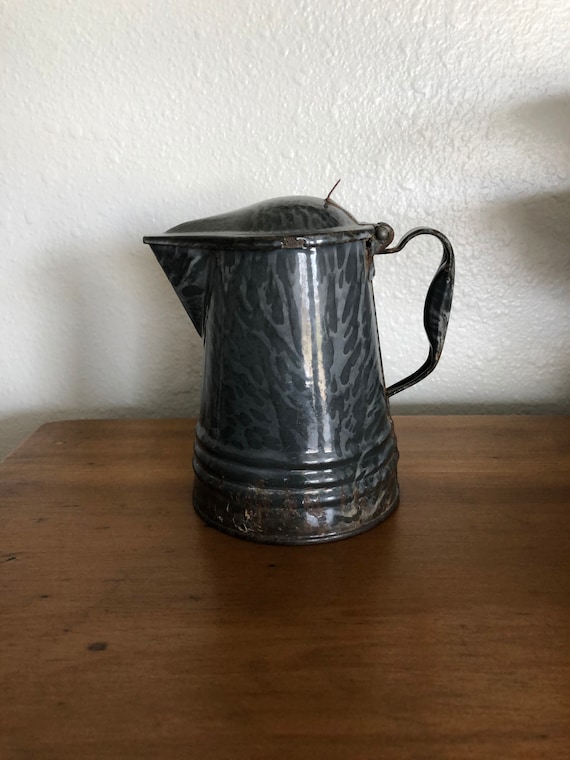
Enamelware of the 1800s by Bea Tifton


Enamelware was a popular cookware in the 1800s because it was light, more durable than porcelain, and easy to clean.
Enamelware began to appear in the 1760s in Germany. It was conventional cookware lined with enamel and touted to be safer for cooking, as it supposedly prevented arsenic and lead from leaking into cooking.  Some critics still complained of enamelware leaching tastes or elements into the food. In 1850 enamelware came to America via the Stuart and Peterson foundry in Philadelphia. This cookware was very basic as opposed to the many patterns and colors that would later be introduced into the United States.

This new enamelware was soon met with enthusiasm, but this soon waned.


Ten years ago the porcelain-lined kettles were considered a great invention for boiling substances that required particular care, and many a thrifty housekeeper has congratulated herself on the possession of one, and then grieved herself sick almost to find it burned black in a few days, through the carelessness of servants, and just as liable to spoil her delicacies as an ordinary tin saucepan.
Lady's Home Magazine, Philadelphia, 1857


Two companies founded by immigrants brought more enamelware to the United States in the 1860s with some improvements. The first one was Lalance and Grojsean, an importer of sheet metal and metal home goods. They set up a manufacturing company in New York and produced agateware, usually blue in color.


Frederick and William Niedringhaus started their company in Missouri, then moved to Granite City, Illinois. The company later became Nesco.
The best-known brands, especially the granite and agate ware names, held onto a strong position into the 20th century. They sold for higher prices. In 1899 Lalance and  Grosjean’s “Agate nickel-steel ware” was much more expensive than Haberman’s “grey mottled enameled ware” L&G's 2 quart lipped saucepan cost 18¢ ; Haberman's was 7¢. Meanwhile, Sears had a set of 17 pieces of "Peerless gray enamel ware" selling for about  $2.70. (http://www.oldandinteresting.com/enamelware-history.aspx)
Each item included a certificate assuring the buyer that it was arsenic and lead free.  
The early enamelware was white. Most enamelware has a white lining even if the outerware has another color of pattern. Then white enamelware items acquired a blue or red rim.  In the 1860s,
the Niedringhaus brothers took the science of enameling a step further and developed  what became known as graniteware. While the enamel was still wet, they applied a thin  piece of paper with an oxidized pattern on it. Once the piece dried, the paper fell away,  leaving a design with the appearance of granite — hence, graniteware. (https://georgetowner.com/articles/2015/09/02/graniteware-marbled-mottled-or-plain/)

 Image result for vintage graniteware


The term later became used to mean any speckled white and gray enamelware.
Speckled, swirled, mottled and solid, graniteware came in a variety of colors: red, blue, purple, brown, green, pink, gray and white. As the years passed, each period  had its own style and color. One of the most popular patterns, even with today’s collectors, was called “end of the day.” Whatever colors were left over at the end of the day were mixed together to make a very unusual and unique color.
(https://georgetowner.com/articles/2015/09/02/graniteware-marbled-mottled-or-plain/)


In the 1930s new materials, such as Pyrex, aluminum, and plastic rendered the enamelware less popular. The metal drives of World War II saw many of the surviving pieces melted down and donated to the cause. Today enamelware is popular among collectors and ranges from quite reasonably priced to very expensive, depending on the type of cookware item.  

Do you have any enamelware in your kitchen?


Sources: