Showing posts with label courting. Show all posts

Sunday, November 28, 2021

FEW PROSPECTS FOR WOMEN IN THE OLD WEST

 We often romanticize the Old West, or any era of time, even though we know living in a certain day and age wasn't anywhere as glamorous as we want to believe. Why is that, I wonder? Because sometimes we need a break from our own reality? Or is it a "grass is greener on the other side" kind of thing?


I'll leave the philosophizing to you, but one I know for sure - for a woman, living in the 1800s wasn't nearly as wonderful as we kid ourselves into thinking. First and foremost, women had few choices. They couldn't own property except in special circumstances like homesteading, etc., they couldn't vote, sometimes they had their fathers arrange marriages for them to a man not of their choosing, and then once they did marry, their work pile doubled, then quickly quadrupled when babies came along, as they inevitably did.


That isn't to say this way of life wasn't a welcome one. The women were used to these situations, and being the nurturers that God made them, they found joy in starting families of their own and caring for their loved ones. But because of the societal rules of the day, women who didn't find husbands right away were faced with bleak futures. Yes, there were exceptions such as suffragettes, or women who decided to pursue academic interests, but most single young ladies during this time were quickly labeled as "spinsters" if the men of their station didn't show an interest in them. And if a single woman's father died, her care fell on the her brother's shoulders until she found a husband. Of course, other less favorable scenarios existed, but I don't like to think of those.
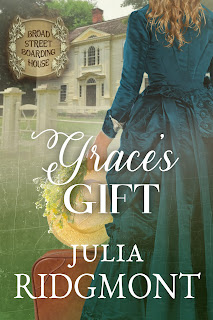


The heroine in a sweet romance I'm writing in the Broad Street Boarding House multi-author series is faced with such a dilemma. In Grace's Gift, Grace Lancaster's parents have left her older brother, Howard, to finish raising her after they die from illness. Grace loves her brother and appreciates what he's done for her, but living with him and caring for him, cooking and cleaning, etc., have become routine. She doesn't even realize that it is time for her to think beyond the little house they live in, or consider the possibility that Howard might want to find a bride of his own--until she accidentally interrupts a bit of courting Howard and a woman in town are engaging in.


That's when Grace decides to find a husband for herself. Which leads her to Denver, Colorado, where spinster sisters Sophia and Sybil Cartwright own a boarding house. (Their father, first a sea captain and then an entrepreneur in the West, left them enough money when he died for them to start a business venture of their own.) It isn't just any boarding house, however. It's rumored that females who stay in the Cartwright sisters' establishment (there are no male boarders allowed) become brides, usually to a man who is staying at the Palmers' boarding house next door. Many a couple have courted at the gate that connects the two lots. Grace, however, won't find her husband at the Palmers' establishment. Her future husband is hiding in the shadows of his more flamboyant cousin--the man whom Grace has already agreed to marry.


Grace's Gift releases on January 11, 2022. I'm enjoying writing this story so much! The characters are fun, and there's a fair amount of intrigue on the part of Grace's betrothed, Phineas Northcott. Can Ephraim Kempton help Grace to see the truth about Phineas before it's too late, or will she resent him interfering in what should be the happiest event in her life?


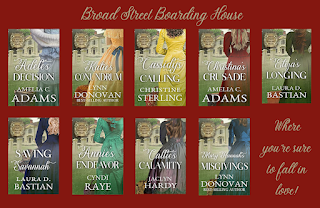
Although this book isn't available as a pre-order, I'd like to invite you to take a look at the other books in this series. Here is the series link, and two more books, Callie's Calamity and Mary Hannah's Misgivings, released yesterday. I'm grateful to have been asked to contribute to this wonderful series and be able to work with such talented authors!


Sunday, August 4, 2013

Courting in the Old West


              We often hear conflicting stories on a woman’s desire to marry during the Victorian Era. Marriage was a woman’s only means of security, a home of her own, and children. So, with these privileges, came many hardships—being tied to the home, bearing and caring for five to seven children, endless household tasks, and in a sense, being a servant to her husband. Therefore, many women, though desirous of the joys of marriage, had ambivalent feelings regarding the establishment.

              Men, however, had a different outlook on the subject. They viewed marriage as a positive enterprise. Marriage meant sex, pampering, and maid service. For the man trying to ranch or farm, marriage meant someone to help him work the land as well as cook, care for the home, and any children born to them. Often the man was a widower and married just to provide his children with a mother. Love wasn’t a prerequisite. A couple was lucky if respect grew into affection.

             Though we realize the above was probably true for the majority of couples, there had to be exceptions. If not, how would writers be able to write those wonderful western historical love stories, the ones with strong, independent women and tough men who weren’t afraid to show their softer side? True, many women had cruel husbands who saw their wives as baby machines and servants, and often abused them. But I believe there were just as many men who adored their wives, who wanted a wife to work alongside them as an equal.

              So, how did men and women meet, get acquainted, fall in love, and marry on the frontier in the 1800s? Many met at church, church socials, weddings, corn husking bees, barn raisings, and other socials that usually involved food, music, and dancing. Courting in the old West usually took place at an older age for girls than it did back east. Women were usually in the early twenties when they married. Men married in the middle to late twenties.

               Public displays of affection, like kissing at corn husking bees, were more acceptable in the old West than in the east, especially during the earlier part of the century when women were in scarce supply. For dates, the couple took walks, took the buggy or wagon out for picnics, took horseback rides, hayrides, cuddled in the hayloft, and danced at socials.
             For men in areas with few women, there were subscriptions to heart-and-hand clubs. The men received newspapers with information about women they could correspond with. Often photographs were included. Over a period of correspondence, the man might convince the woman to join him in the West and marry. Other men found their spouses as picture brides. They might see the picture of a friend’s sister or cousin and invite them to join them in marriage.

              There was also the early custom of bundling, whereby the courting couple were each bundled into a blanket or sack tied at the neck and allowed to share the same bed. Often times a long board was placed down the center of the bed. This allowed the two to talk all night and some cuddling but no sexual intercourse. The custom was more common in the New England states though practiced some in the west.

              In 1849, Eliza Farnham encouraged women to travel to California to meet men and marry. Since only two women accompanied her, Eliza’s efforts weren’t considered successful. Later, Acer Mercer organized two different trips to take women to Washington to become brides to the men living there. Do you remember the 1968-1970 television show Here Comes The Brides? Three brothers risk their logging business to bring 100 women to Seattle to live for a year and hopefully become wives and remain to help settle the territory.

             One of my favorite musicals is Seven Brides for Seven
Brothers.  Adam, the oldest brother, reads The Rape of the Sabine Women, to his younger brothers inciting them to kidnap their brides from town. When researching the story, it's made clear that no actual rape took place. During the founding of Rome by Romulus, the Romans needed wives and tried to negotiate with the Sabines. When they made no progress, they abducted the women and promised the Sabines the women would live in honorable wedlock, share their property and have civil rights.

             History is loaded with stories to tempt our imaginations. Happy Writing!

Linda
www.lindalaroque.com
http://www.lindalaroqueauthor.blogspot.com