Showing posts with label Morgan Horse. Show all posts

Friday, March 4, 2022

MORGAN HORSES By Cheri Kay Clifton


I'm going to make the bold statement that I bet all the Sweethearts of the West are horse lovers.  Many of you may be horse owners, of whom I am truly envious!  Actually, it would be nice to know how many of our authors are equestrians.  Although I've never owned a horse, over my lifetime I've had the joy of riding many horses.

 The two breeds of horses I've always admired are the Morgan (a genetic breed) and the Pinto (a color breed), both of which I chose for my two main characters, Laura and Grey Wolf, to ride in my first book, Trail To Destiny.

 I found out the Morgan was one of the earliest horse breeds developed in the United States and after reading that the United States Equestrian Federation stated, "a Morgan is distinctive for its stamina and vigor, personality and eagerness, and has a reputation for intelligence, courage and a good disposition, I knew he was the perfect choice for my heroine, Laura, to ride on her journey west.  I named him Sonny after a beautiful horse I'd enjoyed riding on scenic trails in the Smokey Mountains.

 All Morgans trace back to a single foundation sire, a stallion named Figure, who was born in West Springfield, Massachusetts in 1789.  At age three, he was given to a man named Justin Morgan as a debt payment.  As was the practice of the day, Figure became known by his owner's name, the Justin Morgan horse.  This colt was the founding sire of the Morgan breed.

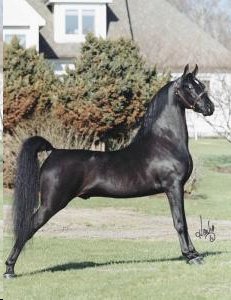
 After Justin Morgan's death, Figure moved on to other owners and spent a life working on farms, hauling freight, and as a parade mount at militia trainings.  He spent his life working and died in 1821 from an untreated kick received from another horse.  His three most famous sons - Sherman, Bulrush and Woodbury - carried on his legacy to future generations of Morgan horses.  They come in a variety of colors although they are most commonly bay, black and chestnut.


These beautiful steeds were used as cavalry mounts by both sides in the American Civil War.  They were in much demand due to their endurance, weight carrying ability, strong short back, excellent feet and legs, and a calm and cheerful temperament with an abundance of natural style that appealed to the Cavalry officers.  

 While Morgan enthusiasts have stated that the horse Comanche, a survivor of the Custer regiment after the Battle of the Little Big Horn, was either a Morgan or a Mustang/Morgan mix, records of the U.S. Army and other early sources argue that claim, stating more likely he was of "Mustang lineage" with possibly "Spanish" blood.  Many also believed Custer rode Comanche, but in fact, Captain Myers Keogh owned and rode the bay horse into battle.

 Although Comanche was touted as the sole horse to survive the famous battle, many horses survived and were taken by Native Americans.  But they had no use for a horse that couldn't dodge a bullet.  Two days after the Custer defeat, a burial party investigating the site found the severely wounded horse and transported him by steamer to Fort Lincoln, 950 miles away, where he spent the next year recuperating. Comanche remained with the 7th Cavalry, never again to be ridden and under orders excusing him from all duties. Most of the time he freely roamed the Post and flower gardens. Only at formal regimental functions was he led, draped in black , stirrups and boots reversed, at the head of the Regiment.

 Comanche, aging but still in good health, continued to receive full honors as a symbol of the tragedy at Little Bighorn. Finally, on November 7, 1891, about 29 years old, Comanche died of colic.  The horse is currently on display in a humidity controlled glass case at the University of Kansas Museum of Natural History in Lawrence, Kansas.

Comanche taxidermy 

 I hope you enjoyed reading about the Morgan Horse, including many of the breed's faithful steeds and in addition, the truth about the famous horse, Comanche.

Happy Trails!


Friday, January 4, 2019

THE MORGAN HORSE By Cheri Kay Clifton


I'm going to make the bold statement that I bet all the Sweethearts of the West are horse lovers.  Many of you may be horse owners, of whom I am truly envious!  Actually, it would be nice to know how many of our authors are equestrians.  Although I've never owned a horse, over my lifetime I've had the joy of riding many horses.

The two breeds of horses I've always admired are the Morgan (a genetic breed) and the Pinto (a color breed), both of which I chose for my two main characters, Laura and Grey Wolf, to ride in my first book, Trail To Destiny.

I found out the Morgan was one of the earliest horse breeds developed in the United States and after reading that the United States Equestrian Federation stated, "a Morgan is distinctive for its stamina and vigor, personality and eagerness, and has a reputation for intelligence, courage and a good disposition, I knew he was the perfect choice for my heroine, Laura, to ride on her journey west.  I named him Sonny after a beautiful horse I'd enjoyed riding on scenic trails in the Smokey Mountains.

All Morgans trace back to a single foundation sire, a stallion named Figure, who was born in West Springfield, Massachusetts in 1789.  At age three, he was given to a man named Justin Morgan as a debt payment.  As was the practice of the day, Figure became known by his owner's name, the Justin Morgan horse.  This colt was the founding sire of the Morgan breed.

After Justin Morgan's death, Figure moved on to other owners and spent a life working on farms, hauling freight, and as a parade mount at militia trainings.  He spent his life working and died in 1821 from an untreated kick received from another horse.  His three most famous sons - Sherman, Bulrush and Woodbury - carried on his legacy to future generations of Morgan horses.  They come in a variety of colors although they are most commonly bay, black and chestnut.


 These beautiful steeds were used as cavalry mounts by both sides in the American Civil War.  They were in much demand due to their endurance, weight carrying ability, strong short back, excellent feet and legs, and a calm and cheerful temperament with an abundance of natural style that appealed to the Cavalry officers.  

Many tributes to these hard-ridden heroes are displayed in paintings, as public statuary, as well as some rare mounted hides and heads staged in proud museums.  Famous Morgan, Rienzi (also known as Winchester) was ridden by General Philip Sheridan to rally his Union troops and was preserved and is at the Smithsonian museum.


General Philip Sheridan Memorial Civil War Bronze Statue 
Depicts Sheridan riding his horse, Rienzi
Washington, D.C.

Little Sorrel was a Morgan ridden by Confederate General Stonewall Jackson in his Civil War campaigns.  After Little Sorrel's death in 1886, his hide was mounted at the Virginia Military Institute Museum, where it's still a popular attraction. The taxidermist took the bones as partial payment and gave them to the Carnegie Museum in Pittsburgh, something that never sat right with Southerners. The VMI Museum got the bones back , cremated and interred them in 1997, on the parade grounds, at the feet of a statue of General Jackson.  "It's the right thing to do," said the curator.


Today, Little Sorrel stands near the raincoat that Stonewall Jackson was wearing when he was mortally wounded. The coat is displayed so that visitors can see the bullet hole.


 General George Armstrong Custer rode several Morgans.  One of his favorites was a horse named Dandy.


"Sighting the Enemy," equestrian statue by Edward Clark Potter of
General George Custer at Gettysburg, located in Monroe, Michigan.
Since Custer was not killed in this battle, his horse is depicted with
all four feet on the ground.

While Morgan enthusiasts have stated that the horse Comanche, a survivor of the Custer regiment after the Battle of the Little Big Horn, was either a Morgan or a Mustang/Morgan mix, records of the U.S. Army and other early sources argue that claim, stating more likely he was of "Mustang lineage" with possibly "Spanish" blood.  Many also believed Custer rode Comanche, but in fact, Captain Myers Keogh owned and rode the bay horse into battle.

Although Comanche was touted as the sole horse to survive the famous battle, many horses survived and were taken by the Indians.  But the Indians had no use for a horse that couldn't dodge a bullet.  Two days after the Custer defeat, a burial party investigating the site found the severely wounded horse and transported him by steamer to Fort Lincoln, 950 miles away, where he spent the next year recuperating. Comanche remained with the 7th Cavalry, never again to be ridden and under orders excusing him from all duties. Most of the time he freely roamed the Post and flower gardens. Only at formal regimental functions was he led, draped in black , stirrups and boots reversed, at the head of the Regiment.

Comanche, aging but still in good health, continued to receive full honors as a symbol of the tragedy at Little Bighorn. Finally, on November 7, 1891, about 29 years old, Comanche died of colic.  The horse is currently on display in a humidity controlled glass case at the University of Kansas Museum of Natural History in Lawrence, Kansas.


Comanche taxidermy 

I hope you enjoyed reading about the Morgan Horse, including many of the breed's faithful steeds and in addition, the truth about the famous horse, Comanche.

I'll end with a horse quote by Chris LeDoux...

"Sit tall in the saddle, hold your head up high, keep your eyes fixed where the trail meets the sky and live like you ain't afraid to die, don't be scared, just enjoy the ride." 

Sources: https://wikipedia.org/wiki/Morganhorse
                https://www.roadsideamerica.com
                https://morganhorse.com
                https://wikipedia.org/comanche_(horse)


Visit my website, www.cherikayclifton.com


Sunday, April 12, 2015

A Horse is a Horse: Breeds Common in the Old West

Wild Horses in Arizona (photo by John Harwood)
By Kathleen Rice Adams

In the Old West, a horse was a horse, right? As long as it had four hooves and a modicum of “horse sense,” nobody really cared about its pedigree, did they?

Yes and no. Just as in the modern world, folks used different horse breeds for different purposes—and a broader spectrum of horse breeds and purposes existed than most people realize.

Without considering draft horses, ponies, and mules (which are fodder for other posts), here are some of the more common horse breeds found west of the Mississippi River. This is not an exhaustive list by any stretch of the imagination—just an accounting of the breeds most folks would have recognized.

Mara, an American Quarter Horse mare
(photo by Derrick Coetzee)
American Quarter Horse
A truly American breed, the Quarter Horse was essential to life on the frontier for very good reasons: They could do almost everything. Heavily muscled, hardy, and acutely intelligent, Quarter Horses were the horses that won the West.

Steel Dust, the first recognized Quarter Horse, was foaled in Kentucky from stock developed in the Colonies by crossing English stock with animals left behind by the Spanish conquistadors. After his arrival in Texas in 1844, the breed came into its own. Originally called “Steeldusts,” the horses quickly became a favorite of Texas ranchers, who admired their “cow sense,” calm disposition, and the short-coupled bodies that made them maneuverable in a variety of terrain. Found in every remuda and pasture from the southern tip of Texas to Canada and from the East Coast to California, the horses worked cattle, broke sod, pulled wagons and buggies…and raced. Racing was as common in the old west as cattle drives and quilting bees. Quarter Horses came by their enduring breed name because on a straight, level quarter-mile track, they can outrun any other horse on the planet—including Thoroughbreds.

American Saddlebred yearlings (photo by Heather Moreton)
American Saddlebred
A cross between the now-extinct Narragansett Pacer and Thoroughbreds, American Saddlebreds were common by the time of the American Revolution, when they were called simply American horses. Tall and graceful like Thoroughbreds, they also exhibited the Pacer’s easy-to-ride gait. Known as Kentucky Saddlers by the early 1800s, owners and breeders prized the animals for their beauty, pleasant temperament, eagerness, strength, and stamina. Although used in the West primarily to pull carriages and provide snazzy mounts for the wealthy, they also did their share of hard work on ranches and farms.

Nez-Perce men with an Appaloosa, 1895
Appaloosa
The Appaloosa arose among the Nez-Perce Indians of the Pacific Northwest. The Nez-Perce were skilled horse breeders, and by selecting the best animals from among the wild herds, they produced equines especially suited to war and hunting. The horses were practical, hardy, and versatile with the additional advantages of tractability, good sense, and almost endless stamina.

Unfortunately, the color pattern that made the horses distinctive also led to the downfall of their creators. To escape continuously broken treaties and the U.S. government’s Indian extermination policies, the Nez-Perce headed for Canada under relentless pursuit, only to surrender several miles from the border when starvation and ceaseless battle prevented their continued flight. The government confiscated their horses—a symbol of the people—and sold them to local settlers, hunting and killing the animals that got away. Today, the annual Chief Joseph ride, open only to Appaloosas, travels the last 100 miles of the Nez-Perce trail marking the battles of Chief Joseph’s band with the U.S. Cavalry nearly 140 years ago.

Mirage, an Arabian stallion (photo by Trescastillos)
Arabian
Prior to the first Arabian’s arrival in the U.S. as a gift to President George Washington, the world’s oldest true breed enjoyed a long and storied history as prized mounts of royalty and European war horses. In 1877, the Sultan of Turkey presented a pair of stallions to General Ulysses S. Grant, who bred them to Arabian mares imported from England. Celebrated for their beauty, intelligence, loyalty, and stamina, a few were used as cavalry mounts in the Civil War but the majority saw lives of leisure among the wealthy in the Old West.

Quick Trigger, a Missouri Fox Trotter (photo by Kayla Oakes)
Missouri Fox Trotter
Developed around 1821 in the Ozark Mountains of Arkansas and Missouri, the Fox Trotting Horse comprised a mixture of Morgan, Thoroughbred, and Arabian bloodlines. The horses excelled at plowing, hauling logs, and working cattle in the rugged, rocky terrain. After adding Tennessee Walker and Standardbred blood, the horses became known as Missouri Fox Trotters and went West as stylish buggy and riding horses. Because of the breed's ability to travel long distances at a speed of five to eight miles an hour, Missouri Fox Trotters quickly became a favorite of sheriffs and marshals, country doctors, and others who needed a comfortable ride.

Known for their surefootedness, sweet nature, and comfortable seat, today Missouri Fox Trotters are the horse of choice for the National Park Service.

Morgan colt (photo by Laura Behning)
Morgan
America’s first recognized horse breed descended from a two-year-old stallion of unknown ancestry acquired by a teacher in 1791 as settlement of a debt. The horse famously passed along his extraordinary traits, including sweet disposition, cobby and well-muscled body, and hardiness. Morgans were official cavalry mounts on both sides during the American Civil War. Confederate General Stonewall Jackson and Union General Philip Sheridan both rode Morgans they personally owned.

Both before and after the war, Morgans served as draft horses, stock horses, and speedy, durable mounts, playing roles on farms and ranches, among the miners during the California Gold Rush, as favored mounts of the Pony Express, and racing horses. Morgan blood heavily influenced the development of Quarter Horses in Texas. Although the breed almost died out in the 1870s, a few diligent breeders revived the bloodlines that continue today.

Mustangs in Nevada (Bureau of Land Management photo)
Mustang
America’s feral horses are living history and an enduring reminder of the country’s Wild West past. Descended from escaped and abandoned horses brought to the New World by the Spanish in the 1500s, Mustangs claim Barb, Sorraia, and Andalusian blood, along with traits inherited from all other American breeds. “Hot” horses (meaning they love to run), their intelligence and intuition made them notoriously difficult to catch, contain, and tame, but once domesticated, Mustangs became strong, loyal, reliable, and sturdy mounts and draft animals, performing all sorts of tasks in the American West.

In 1900, approximately 2 million Mustangs roamed 17 western states; by 1970, thanks to an extermination program undertaken by stockmen who considered the wild horses a threat to their range and purebred herds, fewer than 17,000 remained. The Wild Free-Roaming Horse and Burro Act of 1971 protects the animals now. Under the auspices of the Bureau of Land Management, herds thrive on open rangeland in Nevada, Arizona, New Mexico, Montana, Wyoming, and several other western states. Without natural predators, herds can double in four years, so the BLM periodically conducts roundups and places the detainees up for adoption. Those not adopted are re-released. (The BLM program is controversial and way beyond the scope of this post.)

Paint Horse (photo: American Paint Horse Association)
Paint Horse
Paints, also called pintos during the period, were favored by the Comanche Indians not only for their speed and endurance, but also because their “loud” color patterns gave the horses and their riders “magic” in battle. Reportedly brought to the New World by Hernando Cortés, the first horses with “white splotches” appeared on the American continent in 1519. Some escaped, others were left behind when the explorers returned to Spain, but eventually the animals interbred with other wild horses and produced entire herds with paint markings.

Similar to American Quarter Horses in body type, appearance, and versatility, modern Paints also are considered quintessential stock and rodeo horses.

 Rocky Mountain Horse (photo by Heather Moreton)
Rocky Mountain Horse
Somewhat of a latecomer, the Rocky Mountain horse originated in the foothills of the Appalachian Mountains of Kentucky. Largely a secret outside that area until about 1880, the horses were surefooted, easy-gaited, and versatile. In the Old West, postmen, doctors, and traveling preachers favored the horses. Because the breed also is strong and tough, Rocky Mountain Horses were used to plow fields, herd cattle, and pull buggies and wagons.

Tennesse Walking Horse (photo by Jean)
Tennessee Walking Horse
Known today primarily for its “running walk” gait and flashy, high-stepping movement, the original Tennessee Walking Horses were developed in the American South for use on plantations in all sorts of capacities. The breed’s ancestors include Narrgansett Pacers, Canadian Pacers, and Spanish Mustangs from Texas. Today’s breed arose in the late 1800s after interbreeding with Morgan stock.

Primarily a pleasure-riding horse for well-to-do city dwellers, a few Tennessee Walkers were employed by Old West doctors and others who required a mount that wouldn’t jar all their bones loose during lengthy trips.

Canadian Horse (photo: Rare Breeds Canada)
Canadian Horse
One last breed deserves mention, not because people would have encountered it in the Old West, but because it contributed a great deal to other breeds. Descended from draft and riding horses imported to Canada in the late 1600s, the Canadian Horse became popular in the American Northeast during the late 1700s. Due to massive exportation to the U.S. and Caribbean, along with extensive and often fatal service during the American Civil War, the breed nearly became extinct in the mid-19th Century.  In the mid-20th Century, a group of dedicated breeders began a repopulation program, but the horse remains a rare breed.

http://holeinthewebgang.com/