Showing posts with label MAIL-ORDER MORIAH. Show all posts

Wednesday, December 26, 2018

THE REAL MISS KITTY FROM GUNSMOKE


Were you a fan of “Gunsmoke” when it was a radio and TV staple? Although I wasn’t aware of the radio show, my family never missed the TV version. At the time we watched “Gunsmoke”, I had no idea that the character of Miss Kitty was based on a real person. That woman was Carlotta J. Thompkins, also known as Lottie Deno, Mystic Maude, Angel of San Antonio, Faro Nell, Queen of the Pasteboards, and Charlotte Thurmond. She and Frank Thurmond were immortalized as Faro Nell and Cherokee Hall in a series known as the Wolfville books, written by Alfred Henry Lewis. 

Lottie was born April 21, 1844 to upper-class Kentucky farmers near Lexington and Louisville. At one time, her father served in the Kentucky General Assembly. The area traded with both northern and southern states and her father traveled a great deal on business. He grew tobacco and hemp as well as engaging in horse trading, racing, and breeding.

With her younger sister, she attended school at an Episcopalian convent. After completing her education there, the attractive redhead traveled with her father on business to such destinations as Detroit, New Orleans, and Europe. He had no son and intended Lottie to take over his business for him. While on these trips, her father taught her the intricacies of gambling with cards.

Mary Poindexter was Lottie’s seven-foot tall nanny. Mary was loyal to and protective of Lottie. Her family didn’t have to worry about Lottie as long as Mary was with her. On several occasions, Mary saved Lottie from harm.

When the Civil War began, Lottie was seventeen. Her father enlisted and was immediately killed in battle. She, her mother, and sister were left tending the plantation. Relatives pooled money and sent Lottie to Detroit in the hope she would find a wealthy husband to help her family. She loved the parties and balls, but instead of finding a suitable husband, she met up with Johnny Golden, one of her father’s former jockeys who had become a gambler.
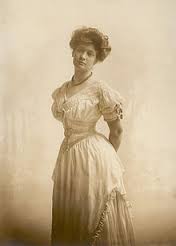
Carlotta Thompkins

Eventually, Lottie ran out of money. She and Johnny, accompanied by Mary, struck out plying the riverboat gambling parlors throughout the war. She sent her relatives money but knew they wouldn’t have approved of her gambling. She told her straight-laced Episcopalian family that she had married a wealthy Texas rancher. Some say she never saw any of them again while others insist her sister came to San Antonio after their mother’s death.

Near the end of the war, Lottie and Mary headed for San Antonio. At the time, the town was well-known as a wide-open gambling town. Johnny Golden was to meet up with them there later. Lottie found a job dealing in Frank Thurmond’s University Club, with Mary seated on a stool behind her to watch for trouble.

Playing Poker

It was a winning hand that earned her a new name. A drunken cowboy yelled out to her “Honey, with winnings like that, you ought to call yourself Lotta Denero.” She didn’t take his full advice, but she did change her name to Lottie Deno.

Lottie’s dress and manners were those of a genteel Southern lady. She didn’t allow cursing, drinking, or tobacco at her table. Obviously, such a gracious lady wouldn’t cheat, would she? Men lined up to play cards with the “Angel of San Antonio”.
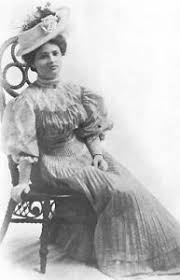
Lottie Deno

Lottie fell in love with her boss, Frank, and was loyal to him. Frank was part Cherokee whose family was from Georgia. He and another player got in a fight and Frank killed the man with a Bowie knife he wore on a string down his back. The deceased man’s family put a bounty on Frank so he headed west. Lottie set out to follow Frank and searched across the state in Fort Worth, Denison, Jacksboro, and Fort Concho.

Bowie Knife


This was during a local economic boom on the Texas frontier as demand for bison hides spiked in the mid and late 1870s. Cowboys and traders flush with cash during the period became targets for gamblers in frontier communities. 

Soon Lottie found Frank working in Fort Griffin under the name Mike Fogarty. He was bartender in a place called the Bee Hive. Lottie got a job dealing there. 

Frank Thurmond

It was at Fort Griffin that her notoriety and legend became most established. Fort Griffin was a frontier outpost west of Fort Worth near the Texas Panhandle known for its saloons and the rough element it attracted. (Closest modern town would be Albany, Texas.) Gaining fame as a gambler, Lottie became associated with various old west personalities, including Doc Holliday, to whom she was introduced by Frank. Supposedly, Lottie won $3,000 from Doc in one night.

At Fort Griffin, Johnny Golden caught up with Lottie. He died mysteriously in an alley that night. Lottie paid for his funeral and coffin, but didn’t attend. Instead, she stayed in her home with curtains drawn.

After five years at the Bee Hive, Frank and Lottie left for New Mexico and married December 2, 1880. Along with gambling, they picked up a couple of silver mines and owned a restaurant. Once again, Frank was in a fight in which he killed a man. This time Lottie and Frank had had enough of the gambling life and changed course. 

They left Silver City, New Mexico and settled in Deming. Frank was in mining and real estate and eventually became an officer of Deming National Bank. As Charlotte Thurmond, Lottie was a well-respected member of the community. 

Although they quit gambling, Lottie Deno hosted one more game in 1892, which may or may not have raised $40,000 to build St. Luke’s Episcopal, Deming's oldest church. Allegedly, Frank’s friend Doc Holliday participated in that game. Lottie Deno made one of St. Luke’s altar cloths but the cloth has not been located in this century. Lottie even taught Sunday School.

Frank and Lottie had been together for over forty years when he died in 1908.  She died February 9, 1934 and is buried beside Frank in Deming.


Sources:



Through a crazy twist of fate, Caroline Clemmons was not born on a Texas ranch. To
compensate for this illogical error, she writes about handsome cowboys, feisty ranch women, and scheming villains in a small office her family calls her pink cave. She and her Hero live in North Central Texas cowboy country where they ride herd on their rescued cats and dogs. The books she creates there have made her an Amazon bestselling author and won several awards. Find her on her blog, website, Facebook, Twitter, Goodreads, and Pinterest.
Join her Facebook readers’ group, Caroline’s Cuties for contests, news, and chats. 
Click on her Amazon Author Page for a complete list of her books and follow her there.
Follow her on BookBub.
Subscribe to Caroline’s newsletter here to keep up with new releases, contests, and receive a FREE novella of Happy Is The Bride, a humorous historical wedding disaster that ends happily—but you knew it would, didn’t you?

Monday, November 26, 2018

CHRISTMAS IN FILM -- IT'S OLDER THAN YOU MAY BELIEVE!


The time from Thanksgiving until Christmas Eve is my favorite time of year. My husband and I have been watching Christmas movies each evening via Netflix. Are there certain movies your family watches each year at this time?
For this Christmas post, I thought I’d take you on a trip through the earliest holiday movies.
First Christmas Movie Made

I was surprised that the first Christmas movie was made in 1898 by George Albert Smith. This is a vignette only a few minutes long. Also, this is the first appearance of Santa Claus in film. He looks nothing like the Santa shown now.


Can you visualize how excited people were to see this movie? I wonder if the movie was shown in an auditorium or tent. In addition, I wonder how much the tickets were, don’t you?
Scrooge


Scrooge or Marley’s Ghost was made in 1901. At least half of the film has been lost, but enough remains that one gets a sense of what the entire movie was like. This is the oldest known film adaptation of Charles Dickens' 1843 novel A Christmas Carol.  It was shown to King Edward VII and Queen Alexandra at Sandringham House in December 1901 in a Royal Command Performance.

The Parish Priest’s Christmas


Shining with simple faith, this work by Alice Guy, the world’s first woman director, captures a more pious side of Christmas in 1906.
A local priest attempts to buy a statue to complete the crèche, or Nativity scene, in his church. Unfortunately, the priest and his humble flock lack the funds to purchase even the smallest stand-in for baby Jesus. At mass, beautiful angels appear and reward the congregation’s devotion by bestowing an effigy of Jesus to fill the cradle.
In The Parish Priest’s Christmas, Alice Guy deploys special effects for maximum dramatic impact. The film’s deliberate pace and the naturalistic interactions between characters draw the audience into the priest’s dilemma. The special effect of the heavenly angels is achieved through hidden cuts
The Night Before Christmas


Edwin S. Porter, a pioneer of narrative logic in cinema and director of The Great Train Robbery (1903), evokes the snowbound wonder of Clement Clarke Moore’s beloved poem in 1905. And, as in The Great Train Robbery, Porter ends the film with a fourth-wall-breaking shot (not unusual in early movies) as Santa Claus acknowledges the spectators and wishes them a merry Christmas.
The Night Before Christmas involved a herd of apparently real reindeer, as well as a model version to show their “flight” from the North Pole. You can see the  iconography of Christmas as we know it today—the jolly red suit, the list that Santa’s checking twice, and the magical sleigh. Intertitles with verses lifted straight from Moore’s poem contribute to the film’s charm.

A Christmas Accident


You may remember how much The Grinch was changed by Christmas. In the same tradition comes a short, sweet movie from Edison Studios in 1912.  A Christmas Accident provides a glimpse into the holiday celebrations of ordinary, working-class people shortly after the turn of the century.

Prosperous, crotchety Mr. Gilton and his long-suffering wife live right next door to the harmonious Bilton family. After months of enduring their neighbor’s bad temper, the Biltons are settling down for their modest Christmas Eve festivities.
“Santa Claus is poor this year,” says Mr. Bilton, explaining to his children why they’re not getting a turkey. But what to their wondering eyes should appear? Why, Mr. Gilton, blown by a snowstorm right into their home—with a turkey under his arm.
The Adventures of the Wrong Santa


In 1914, a comical amateur sleuth named Octavius bumbled through a series of short one-reel films produced by Thomas Edison. In the final series installment, the hapless hero shows up at a party to dress as Santa for his friend’s children. Holiday mayhem ensues.
No sooner does Octavius don the bushy white beard and red suit than he gets conked on the noggin by a burglar. Dressed up in a different Santa suit, the villain steals the children’s gifts from under the tree and flees with Octavius in pursuit.
All this merely serves as an excuse to show two men in Santa costumes chasing after each other and brawling. I suppose this is an historic Die Hard. Fortunately, as the intertitles tell us, “Octavius never fails.” The detective ends up returning the Christmas presents and gets to canoodle behind a curtain with a pretty girl.
Excluding the two battling Santas, this movie documents the customs of a middle class Christmas on the brink of WWI.


Those above are old films, some of which have been restored. As for my family, our favorites are The Muppets’ Christmas Carol (which is amazingly faithful to the book), the original Miracle on 34th Street, Christmas in Connecticut, and Christmas Story. I can’t fail to mention classics like White Christmas, Elf, It’s A Wonderful Life, Die Hard, Home Alone, The Holiday, and The Santa Clause. Actually, there are too many Christmas films to list here.
What are your family’s favorite Christmas movies?
Sources:
YouTube
The Lobby Post, John Hess


Caroline Clemmons has two new releases. BLESSING is book two in the Widows of Wildcat Ridge Series. This book is set in Utah in the gold mining town of Wildcat Ridge after explosions kill most of the town’s men. BLESSING is available at http://getbook.at/blessingWOWR

Blessing is the real name of Buster Odell, who thinks her nickname more suitable for a rancher. She has horses she's auctioning off to split the money with the widows in town. Thad King tracks stolen horses to Buster's ranch. Buster is adamant that her father would not knowingly buy stolen animals. Together, Buster and Thad plot to discover the horse thief and capture whoever is rustling Buster's cattle.


MAIL-ORDER MORIAH, a Brides of Beckham novel, is the first in the exciting new Pearson Grove Series. Up for pre-order now, it will be released on December 6. You can reserve your copy now at http://getbook.at/MORIAH .

Moriah travels from England hoping to find a job in a shop where she can save to send for her sister. After an unsettling encounter with the owner of the shirt factory in which she works, she becomes a mail-order bride. Scott Ferguson owns the mercantile in Pearson Grove, Texas. He needs a wife to help in his store, cook, clean, and be a true helpmate. Marriage brings more than either had expected, including a bank robbery and Moriah's rescue of a woman from a burning home.