Showing posts with label Fire Eyes. Show all posts

Thursday, March 28, 2019

HOW TO CURE CABIN FEVER--READ A GOOD BOOK! by CHERYL PIERSON


When the cold weather starts up (and seems to continue forever!), I’m all too ready to just hunker down and get out of the Oklahoma wind—the older I get, the more I feel that way. But one thing I’ve discovered: If you have plenty of food (for both humans and the dog), running water, and firewood, it’s not terrible. Well, until you have to go out for MORE food!

In Oklahoma, we don’t normally get a lot of snow, but we do get some. The worst problem is the ice. It seems, here in Oklahoma City, we sit on the very cusp of the jet stream—and I can’t say how many times we’re told, “It COULD be just rain, but if the temps drop even one degree, it’ll be FREEZING rain and ice.”

I can’t even imagine how the men and women we write about in our novels survived those long, cold winters. They must have been chopping firewood every day, year-round, except when the freezing rains hit in the winter. With books so scarce, I’m sure the ones that were available must have been memorized by those who read.


Thank goodness we live in a day and age when we are able to read as much as we want—online (if the electricity stays on!) or the old-fashioned way—a paperback book in hand. I do a lot of reading for my work at Prairie Rose Publications, but I have books I read “for pleasure” when I get a chance—and in the winter months it seems I get a lot more time for that than in the summer. This is how I keep cabin fever at bay when the weather is too awful to venture out.

ONE OF THE FEW STORIES I'VE WRITTEN THAT TAKES PLACE DURING WINTER!

Here are some of my picks I read while I was waiting for spring to roll around. How about you? What do you do to stave off cabin fever in those winter months? Read any wonderful books lately? Please share! I’m always looking for more reading material!

I just recently started reading the COLLECTED COMPLETE WORKS OF CHARLES ALEXANDER EASTMAN and THE ESSENTIAL CHARLES EASTMAN (OHIYESA): LIGHT ON THE INDIAN WORLD (SACRED WORLDS). Here’s the blurb from Amazon about the latter:

This revised and updated edition contains the most important writings of Charles Eastman (Ohiyesa), the first Native American author to live simultaneously in both the traditional world of the Santee Sioux and the modern civilization of the white man. Dr. Eastman also attended the injured at the Battle of Wounded Knee. Ohiyesa's works represent a complete explanation of the philosophy and moral code of the Plains Indian. Ohiyesa's message speaks to every person who seeks a spiritual way in the midst of a society increasingly dominated by materialism and industrial technology. Sun Dance chief, James Trosper writes, It is a small miracle that these important spiritual teachings have been preserved for us. This new edition contains 10 sepia photographs from Eastman's life and a thought-provoking foreword by Raymond Wilson.

There are a LOT of books of writings by Charles Eastman—very thought provoking and just downright wonderful, in my opinion.


Another excellent book—not really a romance, but a true western, is by my friend Robert Randisi—THE GHOST WITH BLUE EYES. It’s a story of how one mistake can make a person sink to the depths of a whiskey bottle, and what it takes to make him climb back out of it.

HERE’S THE AMAZON BLURB: Lancaster hangs up his six-shooter and grabs a bottle after accidentally killing a young girl in a gunfight, but when another girl needs his help, he will fight to regain his soul and his honor in order to save her.


Okay, not a western, but a ROMANCE-- THE MADNESS OF LORD IAN MACKENZIE is book 1 in the "Highland Pleasures" series, or what is known as The Mackenzies. This is an excellent tale by Jennifer Ashley, a shorter piece, and it has a hero you will not likely forget. Ian Mackenzie is afflicted by something—because of the time period this story takes place in, we don’t really know what it is, but it could be autism, could Asperger’s Syndrome—and he is very different. This is the first in a series and I would like to read the others!


I must confess, I did some re-reading of some old favorites, as well. GOLDEN NIGHTS by Christine Monson…speaking of “different” heroes—and heroines—Christine Monson’s characters are always intriguing and no matter how many times you read her stories, the next time you read it again you will find something you didn’t see before.

Here’s the Amazon blurb: Abandoned by her weakling husband on their wedding night, beautiful socialite Suzanne Maintree sets out to track him down in the wilds of Colorado, but is quite distracted by her guide, a handsome English adventurer.

By the way, this blurb doesn’t do this book justice at all. It’s like saying your grandma’s homemade chicken and dumplin’s and cornbread was “good”—there’s so much more to this story!

I could go on and on, but how about a MOVIE to break the cabin fever monotony? Have you ever seen this one? PURGATORY is one you will want to watch. Refuge is a small town in the west where no one carries weapons. There’s no jail, and neither the sheriff nor his deputy even carry a gun. It’s an odd assortment of citizens, who know the rules, and to kill someone else for whatever reason means their mortal soul. It’s not gory, but does have some supernatural elements that are very well done. Stars Sam Shepard, Eric Roberts, Donnie Wahlberg, Randy Quaid, and JD Souther, among others.

I will leave you with an excerpt from FIRE EYES that takes place (appropriately!) in my heroine’s cabin. FIRE EYES is part of a 6-book boxed set, UNDER A WESTERN SKY! I’m so proud to have my story in this set with 6 different authors (Agnes Alexander, Celia Yeary, Kaye Spencer, Patti Sherry-Crews, Tracy Garrett and Cheryl Pierson). The best part is, it’s only .99 right now!

What's your cure for cabin fever? A favorite book or movie, or something else?

EXCERPT FROM FIRE EYES:
THE SET UP: Jessica Monroe is living alone with her adopted daughter in the eastern part of Indian Territory. Her husband has been murdered by Andrew Fallon’s border raiders. Now, the Choctaws have brought her a U.S. Deputy Marshal who has been badly wounded by the same band of outlaws, in the hope that she will be able to save his life. Here’s what happens:

“You waitin’ on a…invitation?” A faint smile touched his battered mouth. “I’m fresh out.”

Jessica reached for the tin star. Her fingers closed around the uneven edges of it. No. She couldn’t wait any longer. “What’s your name?” Her voice came out jagged, like the metal she touched.

His bruised eyes slitted as he studied her a moment. “Turner. Kaedon Turner.”

Jessica sighed. “Well, Kaedon Turner, you’ve probably been a lot better places in your life than this. Take a deep breath, and try not to move.”

He gave a wry chuckle, letting his eyes drift completely closed. “Do it fast. I’ll be okay.”

She nodded, even though she knew he couldn’t see her. “Ready?”

“Go ahead.”

Even knowing what was coming, his voice sounded smoother than hers, she thought. She wrapped her hand tightly around the metal and pulled up fast, as he’d asked.

As the metal slid through his flesh, Kaed’s left hand moved convulsively, his fingers gripping the quilt. He was unable to hold back the soft hint of an agonized groan as he turned away from her. He swore as the thick steel pin cleared his skin, freeing the chambray shirt and cotton undershirt beneath it, blood spraying as his teeth closed solidly over his bottom lip.

Jessica lifted the material away, biting back her own curse as she surveyed the damage they’d done to him. His chest was a mass of purple bruises, uneven gashes, and burns. Her stomach turned over. She was not squeamish. But this—

It was just like what they’d done to Billy, before they’d killed him. Billy, the last man the Choctaws had dumped on her porch. Billy Monroe, the man she’d come to loathe during their one brief year of marriage.

She took a washrag from the nightstand and wet it in the nearby basin. Wordlessly, she placed her cool palm against Kaedon Turner’s stubbled, bruised cheek, turning his head toward her so she could clean his face and neck.

She knew instinctively he was the kind of man who would never stand for this if it wasn’t necessary. The kind of man who was unaccustomed to a woman’s comforting caress. The kind of man who would never complain, no matter how badly wounded he was.

“Fallon.” His voice was rough.

Jessica stopped her movements and watched him. “What about him?”

His brows drew together, as if he were trying to formulate what he wanted to say. “Is he…dead?”

What should she tell him?

The truth.

“I—don’t know.”

“Damn it.”

“You were losing a lot of blood out there,” Jessica said, determined to turn his thoughts from Fallon to the present. She ran the wet cloth lightly across the long split in his right cheek.

His breathing was controlled, even. “I took a bullet.” He said it quietly, almost conversationally.

Jessica stopped moving. “Where?”


Here’s the BUY LINK for AMAZON:

https://www.amazon.com/Under-Western-Sky-Historical-Romance-ebook/dp/B078SGY1HW/ref=sr_1_1?ie=UTF8&qid=1520642631&sr=8-1&keywords=Under+a+Western+Sky

Wednesday, June 28, 2017

THE WORST WRITING ADVICE EVER by CHERYL PIERSON


What was the worst writing advice you ever received? Is there any such animal as “bad writing advice”? Not according to novelist and screenwriter Chuck Wendig. "There's only advice that works for you and advice that doesn't."

Is that true? Sometimes it seems, as writers, we can get so caught up in “the rules” that we forget the story and how to tell it. We become frustrated, and it can be downright maddening to try to remember every piece of advice from every writing source we’ve ever come across and tried to use properly.


Translating our ideas into language is one way of looking at our writing process, but how do we start? I have to admit, I am truly a ‘pantser’, not a ‘plotter’—which is really out of character for me in every other aspect of my life. But somehow, orchestrating everything to an outline and strictly adhering to that brings out the rebel in me. I just can’t do it—and I’ve tried. Here’s an example of the differences from Richard Nordquist’s “About.com” publication on writing:

In his essay "Getting Started," John Irving writes, "Here is a useful rule for beginning: Know the story--as much of the story as you can possibly know, if not the whole story--before you commit yourself to the first paragraph." Irving has written far more novels than I. Clearly he knows what works for himself in a way that I don't always for myself, but this seems to me terrible advice. I'm more inclined to E.L. Doctorow's wisdom. He once wrote that writing . . . is like driving at night: You don't need to see the whole road, just the bit of illuminated blacktop before you.
(Debra Spark, "The Trigger: What Gives Rise to the Story?" Creating Fiction, edited by Julie Checkoway. Writer's Digest Books, 1999)

Yes. That’s what I do. I don’t always see the entire big picture, and I don’t need to from the very beginning. But I do see more than “just the bit of illuminated blacktop”—in other words, the immediate “coming up next” section of the story. So I guess I’m in category #3—Swiss cheese author—I know the basics of what’s going to happen, but even so, there are a LOT of little (and big!) surprises along the way.


Nope. Neither is this one...And by the way, this anthology held the #1 western slot at Amazon for a few days a few years back, and contains my short story IT TAKES A MAN, which was a Western Fictioneers Peacemaker nominee in the Best Short Fiction Category for 2013


Aside from being on one side of the “plotter/pantser” fence and being told you’re wrong by the other side, what is the worst writing advice you’ve ever had? You don’t have to say who gave it to you—but I’m curious…what was it? And do you agree with the idea that there is no bad writing advice, just “advice that works for you and advice that doesn’t”? Bring on the comments and opinions! The worst writing advice I ever received? “Try to write an Amish romance. That’s what’s 'hot' now…” (from an agent). What’s yours?


No. It's not an Amish Romance...
www.prairierosepublications.com


For some great reading, stop by Prairie Rose Publications here:
www.prairierosepublications.com

or take a look here at Painted Pony Books for reading for young and older alike:
www.paintedponybooks.com

Friday, October 28, 2016

USING HISTORIC CHARACTERS IN A WORK OF FICTION--BY CHERYL PIERSON


I am fascinated by Cherokee leader Stand Watie. I've used him as a character in many of my stories. I think the reason I can't seem to get enough of him is because of his remarkable life and accomplishments. Here's a little bit about Stand Watie and what he did--and then I'll tell you about my stories he appears in.


Only two Native Americans on either side of the States’ War rose to the rank of brigadier general. Standhope Watie (Uwatie), fighting for the Confederacy, was one of those two. Yet, what makes this accomplishment so incredible is the fact that while he was fighting for the Confederate States of America, he was also fighting other Cherokee tribal leaders who held opposing political views and very different visions for the Cherokee nation.

Stand Watie commanded the Confederate Indian Cavalry of the Army of the Trans-Mississippi. While the cavalry unit was comprised mainly of Cherokee, some Muscogee (Creek) and Seminole tribal members also served.


Born in Oothcaloga in the Cherokee Nation, State of Georgia, Uwatie (or Oowatie) was also known as Isaac. He was educated in a Moravian mission school. In his early adulthood, he occasionally wrote articles for the Cherokee Phoenix newspaper. The State of Georgia confiscated Cherokee lands in 1832 when gold was discovered, including the thriving plantation owned by Stand’s father and mother. Stand and his brothers, part of the powerful Ridge-Watie-Boudinot faction of the Cherokee council, stood in favor of the Cherokee Removal. Their signing of the Treaty of New Echota facilitated the removal of the Cherokee people to Indian Territory—what is now Oklahoma.

Another faction of Cherokees following John Ross refused to ratify the treaty signing. This segment was known as The Anti-Removal National Party. Members of this group targeted Stand Watie and his brother, Elias Boudinot, along with their uncle, Major Ridge, and cousin, John Ridge for assassination. Stand was the only one who survived the assassination attempt. Although Watie’s family had left Georgia before the forcible removal of all Cherokees in 1838, another brother, Thomas, was murdered by Ross’s men in 1845.

In October, 1861, Watie was commissioned as colonel in the First Mounted Cherokee Rifles. Besides fighting Federal troops in the States’ War, his men also fought opposing factions of Cherokee, as well as Seminole and Creek (Muscogee) warriors who supported the Union.

In 1862, Stand Watie was elected principal chief of the Cherokee Nation, through dissension continued among John Ross’s supporters.

On June 15, 1864, Watie’s troops captured the Federal steamboat J. R. Williams on the Arkansas River off the banks of Pleasant Bluff near Tamaha, Indian Territory. The next morning, Colonel John Ritchie’s men, who were stationed at the mouth of the Illinois River near where the two rivers met, engaged Watie’s men as they attempted to confiscate the cargo. The river was rising, and they fought to a standoff. When Watie learned of the advance of Union troops from Fort Smith, Arkansas, (within about 40 miles), he burned the ship and much of the remaining cargo, then sank it.

Watie surrendered a year later in June of 1865, the last Confederate general to lay down his arms.

In my debut novel, Fire Eyes, I weave this bit of history into my plot. The villain, Andrew Fallon, and his gang have come upon the site where the J.R. Williams was sunk four years earlier. Fallon speculates there could have been gold aboard, and sets his men to dive for it. As mercurial as his temper is, none of them dare question his order. Here’s what happens:


FROM FIRE EYES:

“Damn! I know where we are.” Dobie Perrin said.

Andrew Fallon turned in the saddle, glaring at Perrin, the afternoon sun dappling them through the leaves of the thick canopy of trees. “So do I, you idiot! So do we all, now.”

The secluded cemetery sat on a bluff, overlooking the Arkansas River. They had been wandering for two days, ever since retracing their steps to the first small creek they’d come to. The one Fallon felt sure would give them their bearings. Now, at last, he recognized where they were. He’d figured it out ten miles back.

“Tamaha,” Denver Rutledge muttered. “I was raised up over yonder.” He inclined his head toward the riverbank. “Over in Vian.”

“Then why didn’t you know where we were?” Fallon’s anger surged. “I am surrounded by idiots!”

“I shore ’nuff shoulda known, General,” Rutledge said apologetically. “Right yonder’s where we sunk the J.R. Williams. Rebs, I mean. Stand Watie’s bunch.”

Fallon jerked his head toward the other man. “Right where, soldier?”

Rutledge kneed his horse, coming abreast of Fallon. “Why, right yonder, General. It was in June of ’64. She was a Union ship, the Williams was.”

“What was she carrying?”

Rutledge shrugged. “Don’t rightly know. Supplies, maybe.”

“Payroll? Gold?” Fallon fingered his curling moustache. “Could be anything, eh, Rutledge? But the Yankees were known to cache their gold profits in casks. Maybe that’s what the J.R. Williams was carrying. Casks that weren’t really supplies, but were filled with gold.”

“Could be, I ‘spect.” Rutledge’s voice was hesitant.

Fallon nodded toward the river. “I think maybe we’ll try to find out.”

BUY IT HERE: https://www.amazon.com/Fire-Eyes-Cheryl-Pierson-ebook/dp/B00JTAFTPS/ref=sr_1_1?s=digital-text&ie=UTF8&qid=1476583998&sr=1-1&keywords=Fire+Eyes&tag=pettpist-20

****


The next story Chief Watie was included in was my time-travel western novella, MEANT TO BE. Here's a little bit about this Civil War story:

Robin Mallory is facing another Christmas all alone when she decides to surprise her aunt and uncle several hours away. A flat tire leaves her stranded near a desolate section of interstate. With a snowstorm on the way, Robin has no choice but to walk, hoping to find shelter before the storm hits full force. But the road she chooses leads her back in time, to a battleground she's only read about in history books.

Confederate Jake Devlin, an officer in Stand Watie's Cherokee forces, is shocked when the spy he captures turns out to be a girl. She's dressed oddly, but her speech and the ideas she has are even stranger than her clothing. Where did she come from, and what is he going to do with her? Will he be able to hold on to his heart? Is it possible for a love this strong to span centuries? It is, if it was MEANT TO BE…

BUY IT HERE: https://www.amazon.com/Meant-Be-Cheryl-Pierson-ebook/dp/B00M28NKI2/ref=sr_1_1?s=digital-text&ie=UTF8&qid=1476584160&sr=1-1&keywords=MEANT+TO+BE+by+Cheryl+Pierson&tag=pettpist-20

****


My most recent story that Stand Watie appears in is my first venture into "alternate history" in the alternate history anthology, TALES FROM THE OTHERVERSE released through Rough Edges Press. If you aren't familiar with alternate history, it's fascinating to read and to write--because you can change history to suit the story you want to tell. My novella is called MRS. LINCOLN'S DINNER PARTY--a very different story about how the Civil War ended, thanks to Varina Davis, Mary Lincoln, and of all people, Stand Watie. Hmmm...let's just see what's going on at this odd dinner party of Mrs. Lincoln's, shall we?

****

“If you’ll excuse me, sir,” Mary said, “I must return to the receiving line. You’ve had a long journey—if you’d like a moment to freshen up, Mr. Pennington can show you to your quarters—” She nodded at the guard standing behind the general.

“Yes, please. I’d like to know where I need to place my bag,” the general said.

Mary glared at Mr. Pennington, who squirmed uncomfortably.

“Thought maybe there was a mistake, Mrs. Lincoln—”

“Mr. Pennington. There is no mistake. And I will not tolerate rudeness. Please, show General Watie to his quarters—and you carry his bag.”

“Yes, ma’am,” Pennington answered. “This way, sir.”

General Watie gave Mary a rare smile. “Thank you. I will see you at dinner, Mrs. Lincoln.”

Mary felt Abe’s eyes boring into her as she moved across the floor, back into her place in line.

“I’m…surprised at you, Mary.”

Mary felt the hot flush creep up her neck, into her cheeks.

“I’m wondering, what other—guests—you may have invited without my knowledge.”

Oh, how she did wish he’d keep his voice down! She didn’t want the children to see the discord between them—especially here in public, where it was so easy for others to read between the lines, pick up on any issues that were best kept private. As Robert had said earlier, they could all find themselves on the front page of the papers along with unflattering descriptions and comments if they weren’t careful.

She didn’t answer Abe’s prodding, becoming suddenly resentful of being placed in such a predicament. She wouldn’t have had to resort to this if Abe and the others who had started this war had been more reasonable.

And though, in her heart, she believed fathers loved their children dearly…she couldn’t yet reconcile how fathers could call for sons to go to war. War! Where the children mothers had fought so hard to keep safe and whole all their childhood years could—in one moment—be maimed, or left to die a horrific death at the hands of their enemy…The enemy—people who had, just two scant years earlier, been their neighbors, their friends—even their own families!

She couldn’t sit by any longer and do nothing. Robert would be heading off to West Point in the fall…then Eddie and Willie would follow.

She was not going to lose her precious boys to this confounded idiocy.

“My God,” Abe swore, his tone calling her back to the present. “Is that—”

“Varina Davis. Yes. It is.” Mary turned to look up at her husband. “It looks as if Jefferson declined the invitation. Would you care to accompany me to greet her, or—”

“Yes, I’ll come,” he all but growled. “Mary, we have some talking to do.”

But Mary was already on her way across the floor to greet Varina Davis, Confederate President Jefferson Davis’s wife.

BUY IT HERE: https://www.amazon.com/Tales-Otherverse-James-Reasoner-ebook/dp/B018CQF05I/ref=sr_1_1?s=digital-text&ie=UTF8&qid=1476584467&sr=1-1&keywords=Tales+From+the+Otherverse+by+Cheryl+Pierson&tag=pettpist-20

****

I want to thank everyone for joining me today! Do you like to read fictional stories that incorporate real historical characters in them? I love it--if it's done right! Please leave a comment and you will be entered in my drawing for a digital copy of FIRE EYES and I'm also giving away a digital copy of MEANT TO BE!

Monday, March 28, 2016

STAND WATIE--A MOST UNCOMMON SOLDIER by CHERYL PIERSON


Only two Native Americans on either side of the States’ War rose to the rank of brigadier general. Standhope Watie (Uwatie), fighting for the Confederacy, was one of those two. Yet, what makes this accomplishment so incredible is the fact that while he was fighting for the Confederate States of America, he was also fighting other Cherokee tribal leaders who held opposing political views and very different visions for the Cherokee nation.

Stand Watie commanded the Confederate Indian Cavalry of the Army of the Trans-Mississippi. While the cavalry unit was comprised mainly of Cherokee, some Muscogee (Creek) and Seminole tribal members also served.

Born in Oothcaloga in the Cherokee Nation, State of Georgia, Uwatie (or Oowatie) was also known as Isaac. He was educated in a Moravian mission school. In his early adulthood, he occasionally wrote articles for the Cherokee Phoenix newspaper. The State of Georgia confiscated Cherokee lands in 1832 when gold was discovered, including the thriving plantation owned by Stand’s father and mother. Stand and his brothers, part of the powerful Ridge-Watie-Boudinot faction of the Cherokee council, stood in favor of the Cherokee Removal. Their signing of the Treaty of New Echota facilitated the removal of the Cherokee people to Indian Territory—what is now Oklahoma.

Another faction of Cherokees following John Ross refused to ratify the treaty signing. This segment was known as The Anti-Removal National Party. Members of this group targeted Stand Watie and his brother, Elias Boudinot, along with their uncle, Major Ridge, and cousin, John Ridge for assassination. Stand was the only one who survived the assassination attempt. Although Watie’s family had left Georgia before the forcible removal of all Cherokees in 1838, another brother, Thomas, was murdered by Ross’s men in 1845.

In October, 1861, Watie was commissioned as colonel in the First Mounted Cherokee Rifles. Besides fighting Federal troops in the States’ War, his men also fought opposing factions of Cherokee, as well as Seminole and Creek (Muscogee) warriors who supported the Union.

In 1862, Stand Watie was elected principal chief of the Cherokee Nation, through dissension continued among John Ross’s supporters.

On June 15, 1864, Watie’s troops captured the Federal steamboat J. R. Williams on the Arkansas River off the banks of Pleasant Bluff near Tamaha, Indian Territory. The next morning, Colonel John Ritchie’s men, who were stationed at the mouth of the Illinois River near where the two rivers met, engaged Watie’s men as they attempted to confiscate the cargo. The river was rising, and they fought to a standoff. When Watie learned of the advance of Union troops from Fort Smith, Arkansas, (within about 40 miles), he burned the ship and much of the remaining cargo, then sank it.

Watie surrendered a year later in June of 1865, the last Confederate general to lay down his arms.

In my debut novel, Fire Eyes, I weave this bit of history into my plot. The villain, Andrew Fallon, and his gang have come upon the site where the J.R. Williams was sunk four years earlier. Fallon speculates there could have been gold aboard, and sets his men to dive for it. As mercurial as his temper is, none of them dare question his order. Here’s what happens:

FROM FIRE EYES:

“Damn! I know where we are.” Dobie Perrin said.
Andrew Fallon turned in the saddle, glaring at Perrin, the afternoon sun dappling them through the leaves of the thick canopy of trees. “So do I, you idiot! So do we all, now.”

The secluded cemetery sat on a bluff, overlooking the Arkansas River. They had been wandering for two days, ever since retracing their steps to the first small creek they’d come to. The one Fallon felt sure would give them their bearings. Now, at last, he recognized where they were. He’d figured it out ten miles back.

“Tamaha,” Denver Rutledge muttered. “I was raised up over yonder.” He inclined his head toward the riverbank. “Over in Vian.”

“Then why didn’t you know where we were?” Fallon’s anger surged. “I am surrounded by idiots!”

“I shore ’nuff shoulda known, General,” Rutledge said apologetically. “Right yonder’s where we sunk the J.R. Williams. Rebs, I mean. Stand Watie’s bunch.”

Fallon jerked his head toward the other man. “Right where, soldier?”

Rutledge kneed his horse, coming abreast of Fallon. “Why, right yonder, General. It was in June of ’64. She was a Union ship, the Williams was.”

“What was she carrying?”

Rutledge shrugged. “Don’t rightly know. Supplies, maybe.”

“Payroll? Gold?” Fallon fingered his curling moustache. “Could be anything, eh, Rutledge? But the Yankees were known to cache their gold profits in casks. Maybe that’s what the J.R. Williams was carrying. Casks that weren’t really supplies, but were filled with gold.”

“Could be, I ‘spect.” Rutledge’s voice was hesitant.

Fallon nodded toward the river. “I think maybe we’ll try to find out.”

****

AND LATER, WILL THE HOSTAGES BE ABLE TO ESCAPE WHILE FALLON’S MEN ARE OCCUPIED WITH THE SHIP?

“What’s he doing, Tori?” Lily whispered. She moved closer to her sister. The night had turned colder, and the girls’ clothing was becoming threadbare and ragged.

Tori shook her head. “Fallon’s plumb crazy, Lily. Making his men dive for that ship! What’s he think he’s going to do if he finds it? Pull it up with his bare hands?”

“Or a rope, maybe,” Lily said innocently.

Tori didn’t say anything. She reminded herself that Lily was, after all, only eight years old. And she, at eighteen, knew how the world worked much better than little Lily did. At least Lily had stopped crying all the time. Now, Tori wasn’t sure if that was an improvement.

Lily sometimes scared her, the way her eyes looked hollow. Like there was no feeling left in her. Tori had no mirror, but her little sister looked like she herself felt. Older than she should be. And sad. But Lily didn’t seem to be afraid any longer, and Tori supposed that was a good thing.

Tori knew what Fallon intended to do with her and Lily. But the initial shock and fear of Fallon’s intent was overshadowed by other things that had actually happened. The violent deaths of their parents and younger brother, the endless days of riding with scant food and water, the bone-deep weariness that never let up, not even when she slept on the hard ground at night next to Lily.

She was responsible for Lily, now that her parents were gone. She squared her thin shoulders, her gentle eyes turning hard for a moment. She would protect her sister, no matter what.

Tori watched as Fallon ordered three of his men back into the water yet another time. Even if they could see what they were diving for, it would be too deep to reach. But the scene helped Tori realize just how unstable Andrew Fallon was. Once or twice, she’d caught herself thinking he was almost a nice man. He’d brought her and Lily a blanket one cold night. And he’d given them extra rations another time. But she knew he was not nice, not even sane.

Evil, was what Andrew Fallon was. Evil, and most insane.

She watched him, posturing and screaming at his men, who were so terrified of him that they were making fools of themselves trying to dive for an unreachable goal, a ship that may contain treasure, but just as well may not. A vessel that was impossible to get to, all the same. Especially in the pitch-black night. Lily leaned against her, her weight heavy with sleep. They sat beside a tree, their backs propped against the rough bark. The night was cool, and Tori had drawn the blanket close around them. She sagged against the tree trunk, her arm around her little sister, as Lily’s eyelids drooped.

Friday, January 29, 2016

THE NAME GAME by CHERYL PIERSON

I am a collector of names. Have been, ever since I was a kid. Probably because I always wished for a different one, myself. Mine wasn’t really exotic, but it was…different. Cheryl. My parents decided on the pronunciation of “Chair-yl” rather than the more common way of saying it. The way a million other people sad it…with a “SH” sound, “Sheryl,” rather than the hard “CH” sound.

So when I began writing, I knew my characters had to have ‘good’ names—names that fit. Names that weren’t too strange, but not too common. Names that were appropriate for the time period, the setting, and the culture.

The hero, of course, had to have a name that was also something that could be whispered by the heroine in the throes of passion, yet something that would be tough enough on the villain’s lips to strike a modicum of fear in his heart, just by uttering it.

Because I was writing historical western romance, I decided to pull up a chart that would give me an accurate “slice of life”—possible names for my heroes. According to US Social Security records, the top ten names for men in 1880 were: John, William, James, Charles, George, Frank, Joseph, Thomas, Henry, and Robert.

Okay, I could maybe work with the top four. In fact, the first book I ever wrote was about a gunslinger of this time period called ‘Johnny Starr.’

And William could be shortened to ‘Will’—still masculine; but never ‘Willie.’ James—very masculine, and unwittingly, calls up the rest of the line—‘Bond. James Bond.’ At least, it does for me. I could even go with Jamie. Charles is pushing it. George, Frank, and Joe are names I have and would use for a minor character, but I’d never use those for my hero. They’re somehow just too ordinary. Thomas? Again, a great secondary character name, but not a show-stopper. Henry…eh. And Robert is just ‘okay.’

I fast-forwarded a hundred years to 1980. Here are the top 10: Michael, Christopher, Jason, David, James, Matthew, Joshua, John, Robert, and Joseph. Four of the same names were there, though not in the same poll position. By 2008, only William remained in the top 10. John had fallen to #20, James to #17, Joseph to #13. The others had been replaced, not all by modern names, but most in the top 10 were surprisingly “old fashioned.”

2008: Jacob, Michael, Ethan, Joshua, Daniel, Alexander, Anthony, William, Christopher, Matthew.

This told me something. If you aren’t too wild with the names you choose, you have quite a lot of choices! We know that Jacob, Michael, Joshua, Daniel, and Matthew were Biblical names. Just because they weren’t on the “top 10” list in 1880 doesn’t mean they weren’t being used—a lot!

Another source of names for that time period is family records. If you go back through old family documents, it’s amazing to find some of the odd names that cropped up.

Still maybe not ‘protagonist’ material, but your secondary characters could benefit. And who knows? You may find the perfect ‘hero’ name!

No matter what you choose, remember these rules, too:

1. Sound and compatibility—Say your character’s name aloud. Does the first name go well with the last name you’re using? Be careful about running the name together—“Alan Nickerson” or “Dick Keller” may not be good choices. Avoid rhyming names such as “Wayne Payne”—and try to stay away from cutesy names that might make your hero the focus of ridicule.
2. Uniqueness—I’m sure my parents were only trying to be ‘unique’ by pronouncing my name differently than the other 99.9% of the people in the world would automatically say it, but you don’t want your hero to have such an odd name that readers trip over it every time they come to it. Louis L’Amour was a master at coming up with ‘different’ names that were simple. Hondo Lane, Ring Sackett, Shalako, Conagher…and the list goes on.
3. Genealogy—Does it play into your characters’ storyline? If so, you may want to come up with a neat twist somehow on a common name. In my first manuscript, Brandon’s Gold, the gunfighter, Johnny Starr, is named for his father, but the names are reversed. His father was Thomas Jonathan Brandon. He is known as Thomas in the story. Johnny was named Jonathan Thomas Brandon. He goes by Johnny. This keeps a theme alive in my story of the ‘fathers and sons’ of this family, and their relationships. It weighs heavily, because Thomas is dying, but Johnny doesn’t know it. They’ve been estranged for many years.

When Johnny’s own son is born, his wife, Katie, changes the name they’ve decided on just before the birth. She makes Johnny promise to name him after himself and his father, Thomas Jonathan, bringing the circle around once more, and also completing the forgiveness between Johnny and his dying father.

4. Meaning—This might somehow play into your story and is good to keep track of. What do your characters’ names mean? This is a great tool to have at your disposal when you are writing—it can be a great conversation piece somewhere, or explain why your villain is so evil.
5. Nicknames and initials—this can be more important than you think. You may need to have your hero sign something or initial something. Don’t make him be embarrassed to write his initials and don’t give him a name that might be shortened to an embarrassing nickname.

In my book, FIRE EYES, the protagonist has an odd name—Kaedon Turner. I gave him an unusual first name to go with a common last name. I learned later that Caden, shortened to Cade, though not common for the time was not unheard of. Kaedon, shortened to Kaed, was just a different variation. It sets him apart from the other marshals, and emphasizes his unique past in a subtle way.

In my recent contemporary release, SWEET DANGER, my protagonist is half Choctaw Indian. His name reflects both cultures; his Anglo, (Jesse) and his Choctaw, (Nightwalker).

Below are some excerpts from Fire Eyes, available now through TWRP, Amazon, and Barnes and Noble. I hope you enjoy!

EXCERPTS FROM FIRE EYES:

Marshal Kaed Turner has just been delivered to Jessica’s doorstep, wounded and unconscious by the Choctaw Indians. This is part of their first conversation, Kaed’s introduction.

“Just pull.” Her patient moistened his lips. “Straight up. That’s how it went in.”

She wanted to weep at the steel in his voice, wanted to comfort him, to tell him she’d make it quick. But, of course, quick would never be fast enough to be painless. And how could she offer comfort when she didn’t even know what to call him, other than Turner?

“You waitin’ on a…invitation?” A faint smile touched his battered mouth. “I’m fresh out.”

Jessica reached for the tin star. Her fingers closed around the uneven edges of it. No. She couldn’t wait any longer. “What’s your name?” Her voice came out jagged, like the metal she touched.
His bruised eyes slitted as he studied her a moment. “Turner. Kaedon Turner.”

Jessica sighed. “Well, Kaedon Turner, you’ve probably been a lot better places in your life than this. Take a deep breath and try not to move.”

He gave a wry chuckle, letting his eyes drift completely closed. “Do it fast. I’ll be okay.”
She nodded, even though she knew he couldn’t see her. “Ready?”

“Go ahead.”

*******

From Kaed’s POV—Finding out his “angel’s” name!

“I need to stop the bleeding. You were lucky.”

“One lucky sonofabitch.”

“I meant, because it went all the way through. So we don’t have to…to dig it out.” There was that hesitation again, but he already knew what it was she didn’t want to have to say to him. He said it instead.

“All we have to do is burn it.”

She let her breath out in a rush, as if she’d been holding it, dreading just how she was going to tell him. “Right. Sounds like the voice of experience.”

“Yeah.”

She touched his good arm and he reached up for her, his warm, bronze hand swallowing her smaller one. Her fingers were cold, and he could tell she was afraid, no matter how indifferent she tried to act.
“You’ve got one on me,” he muttered.

“What’s that?”

“Your name. Or, do I just call you angel?”

He felt the smile again, knew he had embarrassed her a little, but had pleased her as well.

“Jessica Monroe, at your service, Mr. Turner.”

“Don’t go all formal on me.” He paused, collecting his scattering, hard-to-hold thoughts. “I like Kaed better.”

“Better than Mr. Turner?”

He opened his eyes a crack and watched as she gave him a measuring look, her cinnamon gaze holding his probing stare for a moment. “What you’re doin’ for me warrants a little more intimacy, don’t’cha think, Jessica?”

She glanced back down at the seeping wound, worrying her lower lip between even, white teeth. Her auburn hair did its best to escape its bun.

Kaed’s thoughts jumped and swirled as he tried to focus on her, wondering disjointedly how she’d look if she let her hair tumble free and unbound. And her eyes. Beautiful. A man could get lost in the secrets of her eyes.

Maybe he should’ve used a word other than intimacy.

Available at Amazon:
http://www.amazon.com/Fire-Eyes-Cheryl-Pierson-ebook/dp/B00JTAFTPS/ref=sr_1_1?ie=UTF8&qid=1454088781&sr=8-1&keywords=Fire+eyes+by+Cheryl+Pierson

Sunday, September 28, 2014

EVERYTHING (ALMOST) YOU EVER WANTED TO KNOW ABOUT CHERYL PIERSON by Cheryl Pierson


Hi everyone,

Well, here’s a bit about me. I’m from Oklahoma, born and raised here. My parents and two “much older” sisters and I lived in Duncan, where I was born, until the summer I turned 6—that was 1963. That summer, my dad, who worked in the oilfields as a chemical engineer, was transferred to Seminole. My oldest sister, Annette, had managed to graduate from Duncan High School, but my middle sister, Karen, was going to have to do her last two years in Seminole.

We were pretty much the typical family, like the Cleavers, only Mom didn’t vacuum in high heels and pearls like June did. She kept busy with my sister Karen’s activities, and I started first grade that year at Woodrow Wilson Elementary, just a three-block hike from my front door.

THIS IS ME AT AGE 3--TAKEN FROM A LARGER PICTURE OF THE FAMILY TOGETHER. MY DAD LOVED TO EXPERIMENT WITH PHOTOGRAHY


I was lucky to have a stay-at-home mom, who loved to bake and cook things from scratch. Being a child of the Dustbowl and the Great Depression, it was the only way she knew to cook. A wonderful seamstress, she made a lot of our clothes, including my first prom dress!

Talk about an idyllic childhood. It was small-town America. The “neighborhood gang” rode our bicycles all over that part of town with no restraint, other than most of us were not to go past the main busy street, Strothers. However, there were plenty of other places to ride and we explored every inch of them. My best early childhood friend, Jane, moved in the same week I did, and she was only one year older than I. We grew to be as close as any sisters, and I was heartbroken when her father was transferred a few years later. I took dance lessons and played the flute in band. I was a classically trained pianist, and though I hated the hours of practice, if my mom was still here today, I would tell her what she always said I would—“THANK YOU.”

MY BEST FRIEND, JANE, AND ME IN MY SANDBOX. JANE PASSED AWAY LAST YEAR OF CANCER. I WILL MISS HER FOREVER.


Going to the library was an every-Saturday affair. When Mom went to get her hair done, she dropped me off at the library. Goldie Barnett was the old maid librarian. Books were her life. She had a humped back and the sweetest, gentlest smile that you ever saw. She knew every book on the shelves, and loved to see young people come in and choose “no more than seven” to take home with them.

In the summers, we ran wild, playing sandlot baseball, riding bikes, climbing trees (yes, I was a bit of a tomboy!) and lying on an old packing quilt in the shade with a pitcher of cold lemonade and a favorite book for hours on end. We made frequent trips to Durant, in the southeastern corner of the state, where both my parents were from and where we still had many, many relatives on both sides. My dad’s parents had a huge garden that we would go down and help harvest. This was where I learned the fine art of shucking corn, picking beans and okra, and canning tomatoes.

MY MOM AND DAD AS NEWLYWEDS IN 1944


When I finished my junior year in high school, my dad was transferred again—this time, to Charleston, West Virginia. I was told time and again how lucky I was to have been able to stay in school in one place all those years. I didn’t feel so lucky, though, to have to leave everyone I knew, and all that was familiar. I finished high school in Winfield, a small suburb of Charleston, and started college nearby. Turned out, the move was “in the cards” because I met my husband, Gary, there at college.

HERE I AM AS A JUNIOR IN HIGH SCHOOL. MY MOM MADE THIS DRESS FOR ME--SHE WAS A WONDERFUL SEAMSTRESS!


Gary and I were married in 1979, and here we are nearly 36 years later—still together. Only because we never owned a gun, I’m sure. (Just kidding, really!)

Gary had been married before and had two children from his first marriage, Jennifer and Russell, who came to live with us in 1982. It was really a saving grace, because this was a very hectic time, and a time filled with upheaval, as Russell’s mom insisted on taking him back to live with her, leaving Jennifer with us. Time flew, and in 1986, our first child, Jessica, was born. I had started to write by then, but only at night when everyone else was in bed. In 1989, our son, Casey, came along, and by then Jennifer was a senior and ready to graduate.

These are my "babies" now--just before their birthdays this year (both in September).


We moved into Oklahoma City from one of the outlying suburbs and bought the home we still live in today. For many years, my life was full with taking the kids to their sporting events, play practices, and school activities. I worked part time during those years, and taught piano and guitar for many years, as well. Jessica, Casey and Jennifer all live nearby. Sadly, we lost Russell in a car accident when he was 18.

I’ve loved to write my entire life. I remember as a child, my mother would take little notepads to church with her in her purse for me to “occupy myself” with. In elementary school, I wrote poems, short stories and even a play that my 4th grade teacher let us practice and perform in class. My writing career took off a few years ago when I sold a short story to Adams Media for their Rocking Chair Reader collection. I sold several more to them, sold some newspaper articles, and then sold my first novel, FIRE EYES, a western historical, to The Wild Rose Press. I had a wonderful editor there, Helen Andrew, who really helped me find my way with the book, and will be forever grateful to her. It is now re-released through Prairie Rose Publications, along with most of my other works.


Last year (2013), a good friend, Livia Reasoner, and I teamed up to open a publishing house, PRAIRIE ROSE PUBLICATIONS. In one year’s time, we’ve expanded with a total of five imprints: Prairie Rose Publications, Fire Star Press, Painted Pony Books, Prayers and Promises, and Tornado Alley Publications. We’ve enjoyed publishing many seasoned authors as well as several very talented new authors, as well—and publish a large variety of stories and formats, from anthologies to single-sell short stories, and novels, of course.


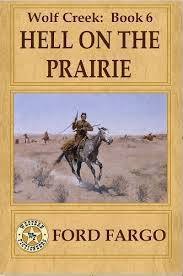
I also continue to write westerns for the Western Trail Blazer’s anthologies and shared world novels about the fictional town of Wolf Creek, Kansas. These are some wonderful tales of the old west, and it’s a lot of fun to work with other authors on a common project.

WOLF CREEK BOOK 1: BLOODY TRAIL--THIS STARTED IT ALL!


This is my granddog, Embry, who has lived with us not for the last 4 years or so. Jessica rescued him from a shelter, then had to sell her house and move into an apartment. So you can see, with his size, he would not have been happy there. He came to live with "Grandma and Grandpa" and is the king of the house here. Remember the old joke, "Where does an 800 pound gorilla sit? Anywhere he wants to..." That's true in our house, too--Embry weighs in at 200 pounds!


Here's the blurb and excerpt from my latest short story, SPELLBOUND, that appears in PRP's COWBOYS, CREATURES, AND CALICO VOL. 2 which will be available for presale this week, along with Volume 1!


BLURB:
Angie Colton and her young sister, Earlene, leave their circus life behind when their mother is killed and their father fears for their safety. Now, living in their hideaway is their only chance to keep Angie from the clutches of the evil man who may have murdered her mother. But Angie has a desperate secret she hides—she and Earlene are both witches, and are just coming into their own.

Brett Diamond must save his brother, Jake, from a ruthless killer. Teller Magdon is determined to force Brett to rob a bank in order to keep Jake alive. But on his way to Ft. Smith, Brett is wounded by an unknown assailant, and taken in by a beautiful angel and her hellcat younger sister. With no time to spare, Brett must confide in Angie about his mission—and Angie must decide how she can help him, yet protect herself from the evil that has managed to find her through an ironic twist.

There’s only one thing for certain: their chance encounter is a work of Fate and love. No matter what happens next, they’ve both been left Spellbound!


EXCERPT:
Her kiss was tentative, sweet, and yearning. Brett let his breath fill his lungs slowly. Her hand caressed his cheek. He raised his right arm and threaded his fingers through her shimmering mass of golden curls, remembering how her head had felt, resting on his shoulder, and the thoughts he’d had as she had snuggled her body close in to his.

She lifted her mouth from his and he gave her a slow smile. “You tryin’ to bewitch me, Angie…or are you just practicin’ your kissin’ on me?”

She smiled back, letting a finger toy with his hair. “Maybe it’s a little of both…I do need to practice…as you said.” Her smile faded, and she met his eyes. “But I do wish it was in my power to bewitch you completely, Brett Diamond.” Her teeth caught in her lower lip as if to keep the rest of what she wanted to say inside.

Heat rushed through Brett’s body at her softly-spoken admission. He pulled her to him, a low groan escaping his chest as her lips met his one more.

“Angie,” he whispered, her name like a prayer in his heart.

She pulled away reluctantly, and Brett cursed himself for scaring her with his aggression. He was taken off guard when she spoke.

“There’s things about me you—you don’t know. And you don’t ever want to find out, Brett.”
“What’re you talkin’ about, Ang?”

She shook her head. “There’s other reasons why Papa wanted us to leave the circus and live out here away from people.” She gave a short laugh. “I guess—maybe he thought he’d keep me and Earlie safe, but…he wanted to keep other people safe, too. From us.”

Uneasiness settled over Brett. He didn’t want to hear any more. He wanted to hold on to his newfound dreams of what life might be like if he settled down with Angie Colton…and he had a feeling she was about to shatter all his illusions.

“You asked if I was tryin’ to bewitch you, Brett. Truth is, I—could, if I wanted to.”
Brett laughed outright at that bold statement. Angie was overcom-ing her uncertainty in leaps and bounds, for sure.

“Why’s that, Ang? You a witch or somethin? The real deal?”

She gave him a long look, remaining silent. The tension in the room stretched between them until Brett felt the air would shatter around them.

“Yes, Brett. That’s what I am. The real deal.”


That’s my life in a nutshell. Not too greatly exciting, just a life mixed with some trials, tribulations, and wonderful happiness. I hope you haven’t been bored—I loved getting to read all about you all and getting to know you better.
Hugs to all my SWEETHEART sisters!
Cheryl

Monday, April 28, 2014

THE WORST WRITING ADVICE EVER by CHERYL PIERSON


What was the worst writing advice you ever received? Is there any such animal as “bad writing advice”? Not according to novelist and screenwriter Chuck Wendig. "There's only advice that works for you and advice that doesn't."

Is that true? Sometimes it seems, as writers, we can get so caught up in “the rules” that we forget the story and how to tell it. We become frustrated, and it can be downright maddening to try to remember every piece of advice from every writing source we’ve ever come across and tried to use properly.


No. It's not an Amish Romance...

Translating our ideas into language is one way of looking at our writing process, but how do we start? I have to admit, I am truly a ‘pantser’, not a ‘plotter’—which is really out of character for me in every other aspect of my life. But somehow, orchestrating everything to an outline and strictly adhering to that brings out the rebel in me. I just can’t do it—and I’ve tried. Here’s an example of the differences from Richard Nordquist’s “About.com” publication on writing:

In his essay "Getting Started," John Irving writes, "Here is a useful rule for beginning: Know the story--as much of the story as you can possibly know, if not the whole story--before you commit yourself to the first paragraph." Irving has written far more novels than I. Clearly he knows what works for himself in a way that I don't always for myself, but this seems to me terrible advice. I'm more inclined to E.L. Doctorow's wisdom. He once wrote that writing . . . is like driving at night: You don't need to see the whole road, just the bit of illuminated blacktop before you.
(Debra Spark, "The Trigger: What Gives Rise to the Story?" Creating Fiction, edited by Julie Checkoway. Writer's Digest Books, 1999)

Yes. That’s what I do. I don’t always see the entire big picture, and I don’t need to from the very beginning. But I do see more than “just the bit of illuminated blacktop”—in other words, the immediate “coming up next” section of the story. So I guess I’m in category #3—Swiss cheese author—I know the basics of what’s going to happen, but even so, there are a LOT of little (and big!) surprise along the way.


Nope. Neither is this one...And by the way, this anthology held the #1 western slot at Amazon for a few days in July of last year, and contains my short story IT TAKES A MAN, which is a Western Fictioneers Peacemaker nominee in the Best Short Fiction Category for 2013

Aside from being on one side of the “plotter/pantser” fence and being told you’re wrong by the other side, what is the worst writing advice you’ve ever had? You don’t have to say who gave it to you—but I’m curious…what was it? And do you agree with the idea that there is no bad writing advice, just “advice that works for you and advice that doesn’t”? Bring on the comments and opinions! The worst writing advice I ever received? “Try to write an Amish romance. That’s what’s “hot” now…” (from an agent). What’s yours?

www.prairierosepublications.com


For some great reading, stop by Prairie Rose Publications here:
www.prairierosepublications.com

or take a look here at Painted Pony Books for reading for young and older alike:
www.paintedponybooks.com

Lots of good summer reads coming your way soon!